500 Jewish Children • SS Negbah to Israel • 20250820

Summary — October 1948 Dutch cinema news on the departure of the first Jewish ship – the SS Negbah – in Amsterdam, bound for Haifa, Israel, with immigrants, including the circa 500 Jewish Children from Eastern Europe after their one year stay in the Children’s Village Ilaniah in Holland, where they were trained for their future task in Palestine.

500 Jewish Children – Series

Episode #1 — In the first episode the arrival of 500 Jewish Children in Holland by steam train from the Dutch National Cinema newsreel of Sep 22, 1947 was reported. Displaced children from Eastern Europe, many of whom lost their parents in the Nazi camps. Travelling from Romania to their destination in the Netherlands, the Children’s Village “ILANIAH”, where they would stay for one to two years, to be trained for a mission in Palestine. The children were then between six and fourteen years old (Note 1).

Episode #2 — The second episode of this short series on these 500 Jewish Children, documented their stay and education in this Children’s Village Ilaniah in Apeldoorn (Netherlands), from their arrival Sep 1947 untill the closing of Ilaniah , October 6, 1948, the day the children started their journey to Israel (Note 2).

Episode #3 — Here the third , and final, episode , with the Dutch National Cinema Newsreel of October 1948, documenting the departure of the children of Ilaniah on the first Jewish ship – the SS Negbah (Hebrew for southbound) – in Amsterdam for their journey to Haifa, Israel. This was one of the first ships to transport legal immigrants to Israel.

The SS Negbah – at the quay in Amsterdam, Oktober 1948 (frame video 20250820). Miracles•Media • 20250820_2

In October 1948, in the port of Amsterdam, the Netherlands, the ship Negbah is ceremonially handed over to the Israeli Shipping Company of Haifa. The Israeli national anthem is sung, the flag is raised, and the chairman of the Dutch Zionist League, Professor S. Kleerekoper, delivers a speech. A Torah scroll is carried on board on behalf of the board of the Netherlands – Israelite Main Synagogue and received by the captain.


The Ilaniah children embark on the Negbah in Amsterdam, 6 Oktober 1948. Source : Dutch National Archive (Photo by Ben Merk | Anefo) | Miracles•Media • 20250819_9

The SS NEGBAH starts its first voyage October 6, 1948 with about 600 passengers from Amsterdam to Haifa, including over 400 of the mainly Romanian Jewish children,
after their one year stay in the Children’s Village Ilaniah in Holland, where they had been trained for their future task in Palestine.


The Ilaniah children embark on the Negbah (frame video 20250820). Miracles•Media • 20250820_1

Notes

1. 500 Jewish Children • Arrival in Holland • 20250811 | Michel van der Burg | Miracles•Media | Settela•Com | ISSN 2949-9313 | TakeNode 5c6e966b-5b45-47ef-ba01-17650007ae20 | URL https://settela.com/2025/08/11/

2. 500 Jewish Children • Ilaniah • 20250819 | Michel van der Burg | Miracles•Media | Settela•Com | ISSN 2949-9313 | URL https://settela.com/2025/08/19/500-jewish-children-ilaniah-20250819/

3. Captions (translated from dutch transcript)

This ship was built here years ago.

It sailed under various flags.

Now it has been purchased by the Israeli shipping company, and symbolically transferred in Amsterdam.

Professor Kleerekoper outlines the importance of this Jewish ship for immigration in Israel. And ends his speech with the assurance that he

‘wants to wish a safe journey.
Not only the crew, also the passengers, but also the entire Jewish people, a safe journey in its path, through a difficult economy, in a threatened world , and a great struggle for independence of its own culture.

The board of the Netherlands – Israelite Main Synagogue donates a Torah, which will remain on board as long as the Negbah will transport Jewish emigrants.

The ship’s name is also a slogan: ‘Na Negev’ – To the Negev – a desert area in southern Palestine that Israel claims.

More than a million immigrants can settle here , once this area has been made fertile.

The NEGBAH takes about 600 emigrants on its first voyage, including a number of stateless people, and almost 500 mainly Romanian children, who were temporarily housed in Apeldoorn.

May the passengers find a happy home in their new fatherland. Shalom.

4. NL – Transcript (dutch , original)

Dit schip werd hier jaren geleden gebouwd. Het voer onder verschillende vlaggen.

Nu werd het aangekocht door de Israëlische scheepvaartmaatschappij en in Amsterdam symbolisch overgedragen.

Professor Kleerekoper schetst het belang van dit Joodse schip voor de immigratie in Israël. En eindigt zijn rede met de verzekering dat hij :
‘een behouden vaart wil wensen…niet alleen de bemanning, ook de passagiers, maar ook het gehele joodse volk, een behouden vaart in zijn weg de moeilijke economie in een bedreigde wereld en een grote strijd om zelfstandigheid van de eigen cultuur.’

Het bestuur van de Nederlands-Israelitische Hoofd Synagoge schenkt een wetsrol, die zo lang aan boord zal blijven als de Negbah joodse emigranten zal vervoeren.

De naam van het schip is tevens een leuze, ‘Na Negev’ – Naar de Negev – een woestijnstreek in het zuiden van Palestina, waarop Israël aanspraak maakt.

Meer dan 1 miljoen immigranten zal dit gebied kunnen opnemen, wanneer het eenmaal vruchtbaar zal zijn gemaakt.

De Negbah neemt op zijn eerste reis ongeveer 600 landverhuizers mee, onder wie een aantal statenlozen en bijna 500 in hoofdzaak Roemeense kinderen, die voorlopig in Apeldoorn waren ondergebracht.

Mogen de opvarenden in hun nieuwe vaderland een gelukkig tehuis vinden. Shalom.

Tags #Negbah #children #Jewish #ship #Palestine #Aliyah #Holland #Ilaniah #Romania #Amsterdam #zionism #education #emigration #holocaust #news #history #ww2 #Polygoon #NIHS #torah

Credits

Film source: Dutch cinema news Polygoon Hollands Nieuws (Producer | Oct 1948) courtesy of Netherlands Institute for Sound and Vision (Open Images).

Citation info : 500 Jewish Children • SS Negbah to Israel • 20250820 | Michel van der Burg | Miracles•Media | Settela•Com | ISSN 2949-9313 | TakeNode 2b1da26e-a39c-4d9d-960a-c1ef669d1509 | URL https://settela.com/2025/08/20/
500 Jewish Children • Ilaniah • 20250819

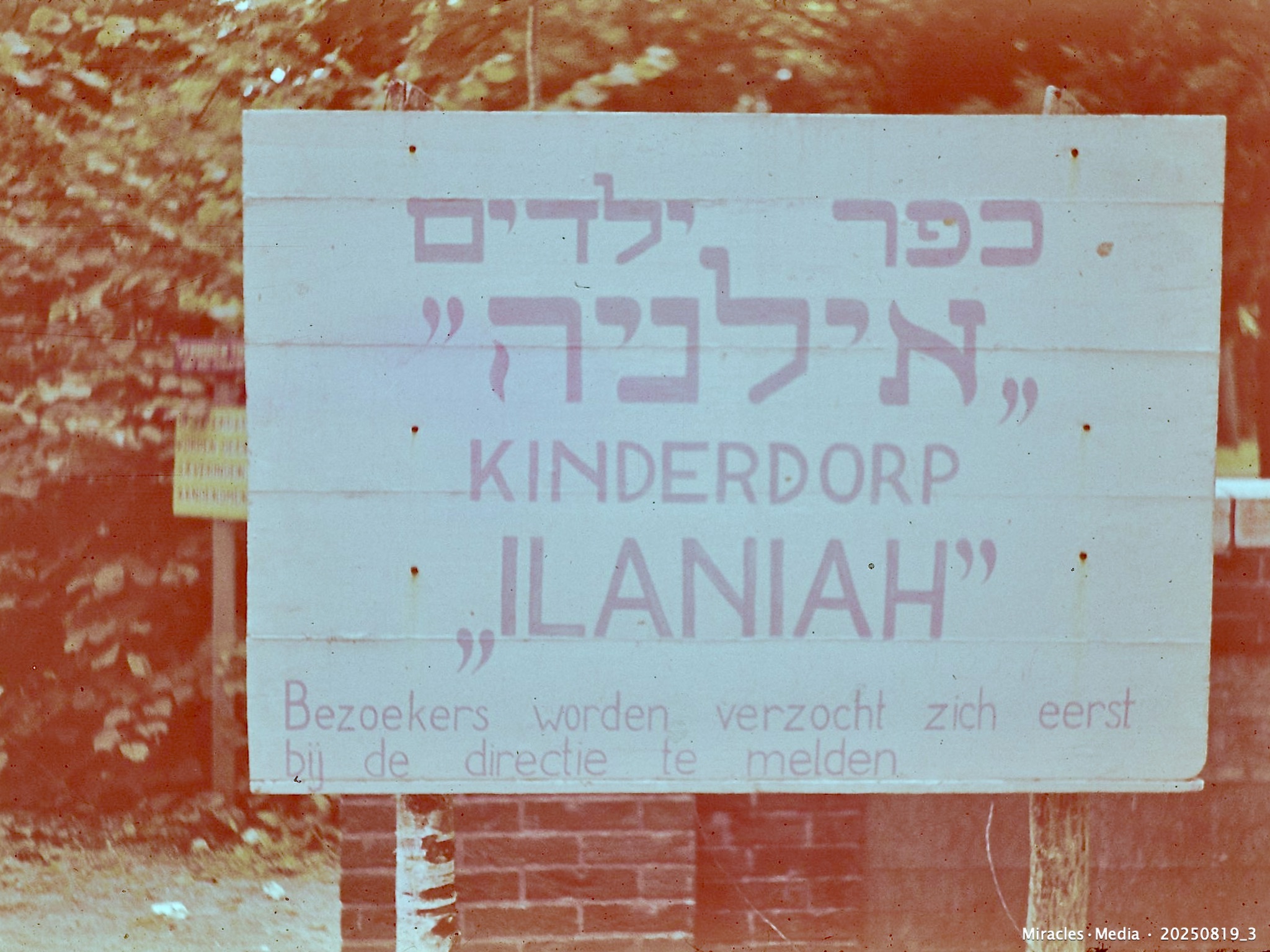
Sign in both Hebrew and Dutch at the entrance to Children’s Village Ilaniah in Apeldoorn, ca 1948. Miracles•Media • 20250819_3

Summary — After World War II, many Jewish children in Eastern Europe were left without parents and living in displaced persons (DP) camps. In 1947, the Dutch government, together with Jewish organizations, decided to temporarily take in 500 Jewish children from Romania.
They were housed in a special Children’s Village called Ilaniah near Apeldoorn, the Netherlands. There, from September 1947, the children (aged 6–14) received schooling in Hebrew, history, and general subjects, as well as training in manual skills like woodworking and sewing, in preparation for life in Palestine. They lived in groups linked to different Zionist youth movements.
Ilaniah also had cultural activities, including a choir that performed in Amsterdam in May 1948 during celebrations of the creation of the State of Israel.
In October 1948, Ilaniah was closed, and most of the children departed on the ship Negbah to Haifa, Israel. The youngest children who couldn’t travel were cared for elsewhere in the Netherlands.

Displaced Persons (DP)

Two years after the end of World War II in Europe, still around a million people lived in displaced person (DP) camps across Europe, primarily refugees from Eastern Europe and former inmates of the Nazi German concentration camps.

Resettlement 500 Jewish Children

For the resettlement of DPs, the Dutch government had decided in 1947 to accept as many DPs as could find a place in the labor market.

In addition, on January 7, 1947, the Dutch government granted a request — a request from Dutch Jewish authorities , officially submitted on December 31, 1946) — to also accommodate 500 children from the camps in the Netherlands, for a period of up to 3 years (Note 1).

Foundation “Five Hundred Jewish Children”

In the first months of 1947, staff was recruited and trained, and the “Five Hundred Jewish Children” Foundation (dutch: Stichting “Vijfhonderd Joodse kinderen”) was established to organize a stay of five hundred Jewish children from Eastern Europe for 1 to 2 years, with an education focused on Palestine (Note 2).

Romania

When it became clear that only a few of the Jewish orphans in German DP camps wanted to come to the Netherlands, it was decided in consultation between the Jewish organizations and the Dutch government that 500 children from Romania would be allowed to come to the Netherlands temporarily. Displaced children from Eastern Europe, many of whom lost their parents in the Nazi camps.

Initially, in July 1947, temporary shelter was arranged in Barneveld (labour camp “De Biezen”) for a small group of 40 displaced children from Eastern Europe.
For the eventual reception — also for a new transport of 450 children — work was still being done on the Children’s Village ‘ILANIAH’, specially set up for them, in the building complex “Het Apeldoornse bos” near Apeldoorn, the Netherlands.

Through collaboration with the International Refugee Organization (IRO) and the Joint American Distribution Committee, the 500 children were selected in Romania from members of the eight Zionist youth organizations in Romania, from far-right to far-left: Aguda, B’nei Akiba, Gordonja, Dror Igoed, Dror Haboniem, Hanoar Hatzioni, Hashomer Hatzair, and Betar. For orphans who lost both parents, the political preference of the deceased parents was investigated. The children were first concentrated in Prague.

On Saturday evening, September 20, 1947, they finally left Prague (Prague-Bubny station) by steam train to the Netherlands.

Children’s Village ‘Ilaniah’

On Monday evening, September 22, 1947, the group of approximately 500 Jewish children arrived in Apeldoorn by steam train from Prague. Their destination was the Children’s Village “ILANIAH” (Hebrew for “My Tree/Wood”), where they would stay for one to two years, to be trained for a mission in Palestine. The children were then between six and fourteen years old.

Earlier that day, the Dutch cinema news made a report of their arrival in the Netherlands at a stopover at Nijmegen station just before Apeldoorn (4).

Play, Work and Learn in Ilaniah

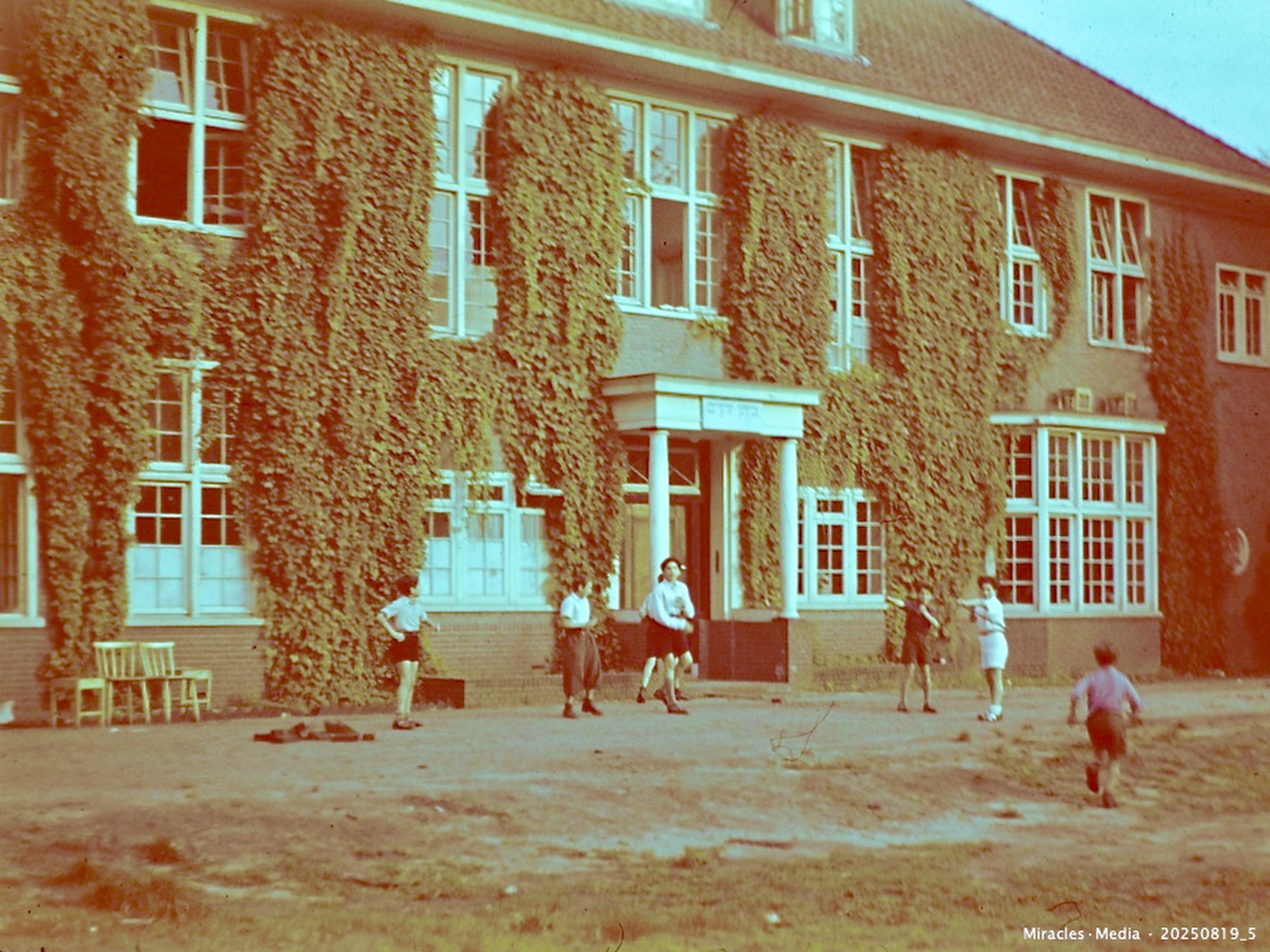
Ilaniah is headed by a pedagogical leader, Benjamin Sussmann, who came over from Palestine. There is a dedicated school with teachers from Romania and the Holy Land, as well as a dedicated pediatrician and nurses.

Children play in Children’s Village Ilaniah in Apeldoorn, ca 1948. Miracles•Media • 20250819_5


Hebrew, math, geography, physics, and both general and Jewish history are taught. The children are staying there in eight groups with their own leaders: Aguda, B’nei Akiba, Gordonja, Dror Igoed, Dror Haboniem, Hanoar Hatzioni, Hashomer Hatzair, and Betar, reflecting the future country’s political parties (Note 5).

Carpentry Room of Ilaniah Children’s Village: A boy shows the teacher his work, 1948. Miracles•Media • 20250819_6

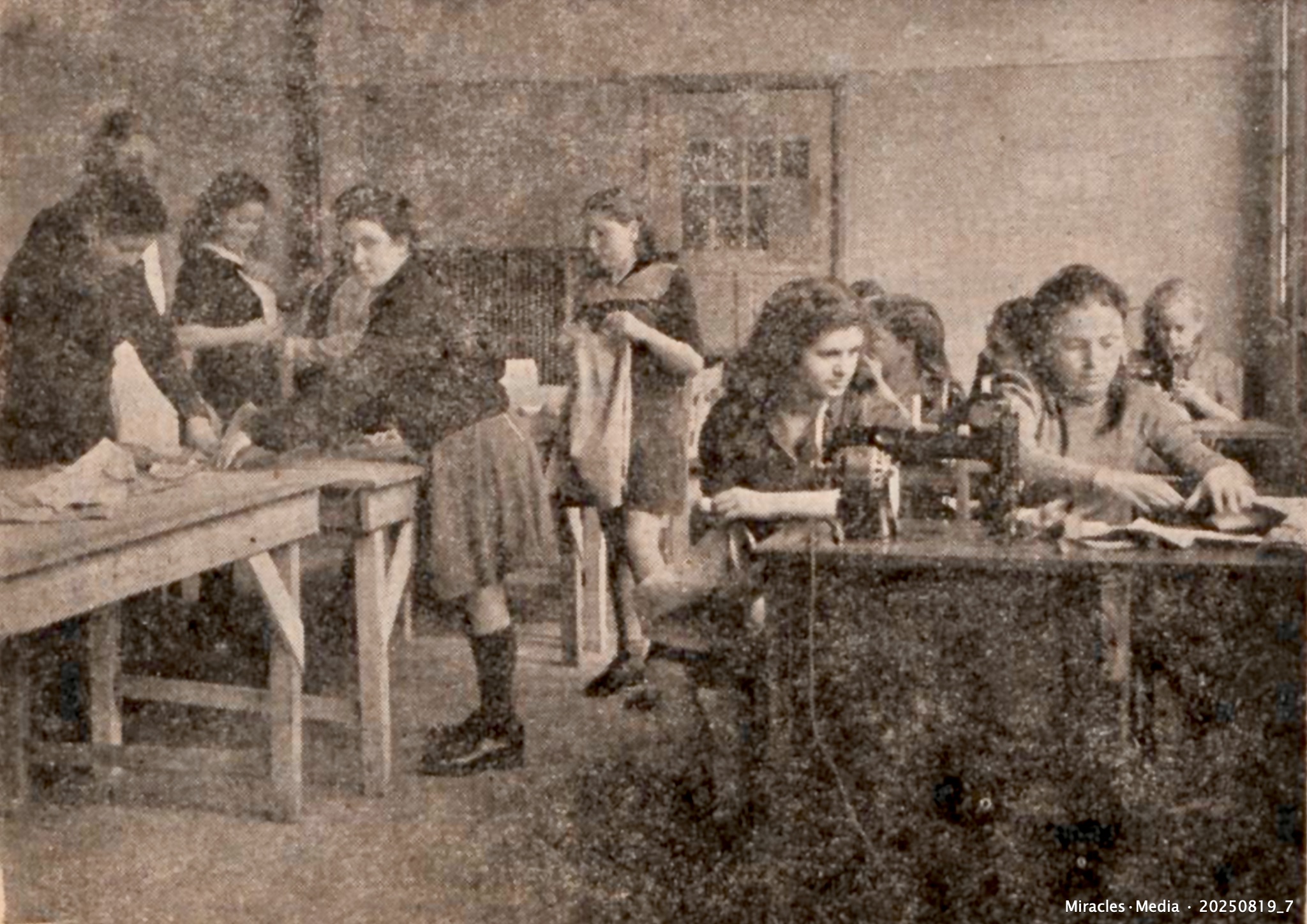
Soon, manual labor training was started under the supervision of the Dutch branch of the O.R.T. Union (Organisation for Rehabilitation through Training) — the Jewish global education network.


Sewing room of Ilaniah Children’s Village, 1948 (Clip). Miracles•Media • 20250819_7

The ORT organization reported that as early as November 1947, the Dutch ORT was training approximately 400 of the 500 Jewish youth in the children’s village in new workshops for woodwork, cardboard work, bookbinding, and cutting and sewing (Note 9).

Children’s choir Ilaniah performs at the proclamation of the Jewish state

There are also music and singing lessons, and a choir has been formed.

On the occasion of the proclamation of the State of Israel on May 14, 1948, the Dutch Zionist League organized a national meeting on May 16, 1948 in the Amsterdam Concertgebouw, with a performance by the choir of the Children’s Village “Ilaniah”.


Performance choir Ilaniah Children’s Village during National Meeting Dutch Zionist League – Proclamation of the Jewish State , Concertgebouw Amsterdam, Sunday 16 May 1948 . Miracles•Media • 20250819_8

Closing Ilaniah and Departure to Israel

A year after the opening of the Children’s Village Ilaniah, Ilaniah was closed again, when on October 6, 1948 the children embarked on the first Jewish ship – the Negbah – in Amsterdam for the journey to Haifa, Israel.


Children embark for the journey to Haifa, Israel, on the first Jewish ship – the Negbah – at the quay in Amsterdam, 6 Oktober 1948. Miracles•Media • 20250819_9

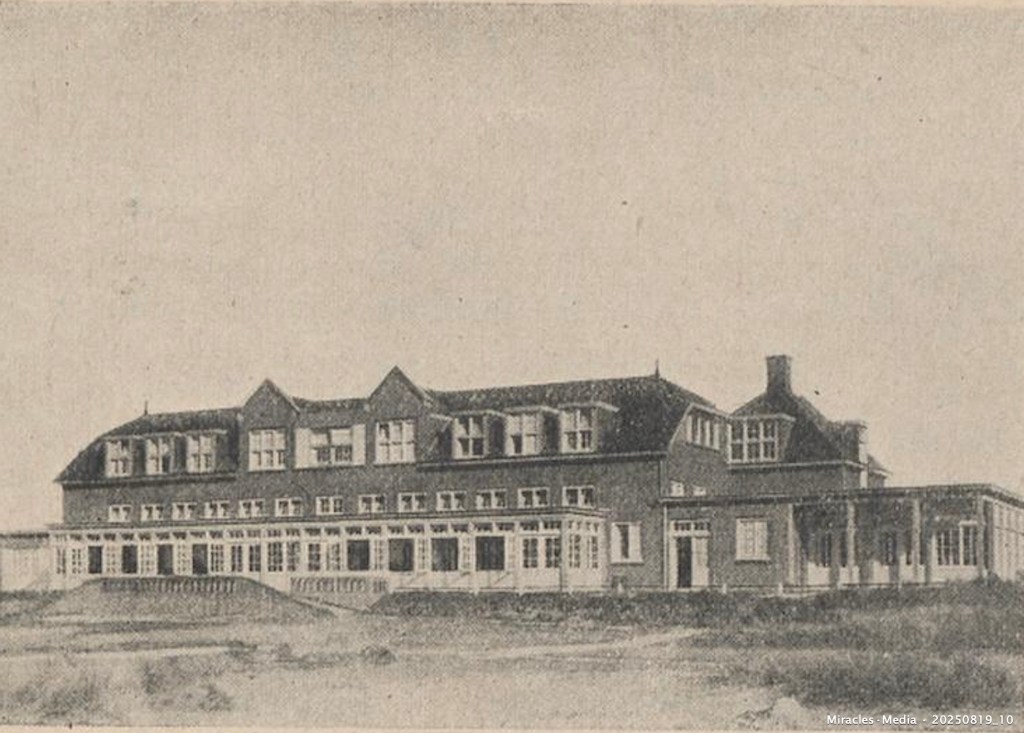
The youngest children who could not travel were accommodated in Zandvoort in the Clara Foundation building on the North Sea coast.


Clara-Stichting, Zandvoort, c. 1921. Miracles•Media • 20250819_10

Notes


500 Jewish children from camps to the Netherlands. Letter (dutch) Jan 7, 1947 Dutch Government to Dutch Jewish Organizations. Miracles•Media • 20250819_1

1. 500 Jewish children from camps to the Netherlands. Letter (dutch) Jan 7, 1947 Dutch Government to Dutch Jewish Organizations. Miracles•Media • 20250819_1 | Source : Nieuw Israelietisch Weekblad, Jan 17, 1947 / Delpher URL https://resolver.kb.nl/resolve?urn=ddd:010873395:mpeg21:a0005


Stichting “Vijfhonderd Joodse kinderen” (Clip). Miracles•Media • 20250819_2

2. Stichting “Vijfhonderd Joodse kinderen” (Clip). Miracles•Media • 20250819_2 | Source : Nieuw Israelietisch Weekblad, April 11, 1947 / Delpher URL https://resolver.kb.nl/resolve?urn=ddd:010873407:mpeg21:a0020

3. Sign in both Hebrew and Dutch at the entrance to Children’s Village Ilaniah in Apeldoorn, ca 1948. Miracles•Media • 20250819_3 | Source : United States Holocaust Memorial Museum, courtesy of Elinor Rosenstein Gabriel

4. Dutch cinema news reports the arrival of 500 Jewish children in Holland, Sep 22, 1947. Miracles•Media • 20250819_4. Source: 500 Jewish Children • Arrival in Holland • 20250811 | Michel van der Burg | Miracles•Media | Settela•Com | ISSN 2949-9313 | TakeNode 5c6e966b-5b45-47ef-ba01-17650007ae20 | URL https://settela.com/2025/08/11/

5. ILANIAH. Source : Nieuw Israelietisch Weekblad, Sep 17, 1948 / Delpher URL https://resolver.kb.nl/resolve?urn=ddd:010872060:mpeg21:p007

6. Children play in Children’s Village Ilaniah in Apeldoorn, ca 1948. Miracles•Media • 20250819_5 | Source : United States Holocaust Memorial Museum, courtesy of Elinor Rosenstein Gabriel

7. Carpentry Room of Ilaniah Children’s Village: A boy shows the teacher his work, 1948. Miracles•Media • 20250819_6 | Photo probably by Boris Kowadlo . Source : ORT and the Displaced Person Camps URL https://dpcamps.ort.org/photos/netherlands/

8. Sewing room of Ilaniah Children’s Village, 1948 (Clip). Miracles•Media • 20250819_7 | Source : Nieuw Israelietisch Weekblad, Sep 17, 1948 / Delpher URL https://resolver.kb.nl/resolve?urn=ddd:010872060:mpeg21:p007

9. Report on ORT Activities in the Netherlands, July-November 1947 . The attached report was submitted to the meeting to the executive of the World ORT Union in Zurich in November 1947. (ort netherlands report.pdf) URL https://dpcamps.ort.org/fileadmin/image_archive/reports/ort%20netherlands%20report.pdf

10. Performance choir Ilaniah Children’s Village during National Meeting Dutch Zionist League – Proclamation of the Jewish State , Concertgebouw Amsterdam, Sunday 16 May 1948 . Miracles•Media • 20250819_8 . Source : Collection Jewish Historical Museum, Amsterdam, JHM 02368-02 | https://joodsecanon.nl/n4z/1948-Viering-Israel-in-Concertgebouw/

11. Children embark for the journey to Haifa, Israel, on the first Jewish ship – the Negbah – at the quay in Amsterdam, 6 Oktober 1948. Miracles•Media • 20250819_9 . Source : Dutch National Archive (Photo by Ben Merk | Anefo). URL http://hdl.handle.net/10648/a8be2e80-d0b4-102d-bcf8-003048976d84

12. Clara-Stichting, Zandvoort, c. 1921. Miracles•Media • 20250819_10 . Source : De geïllustreerde joodsche post. 3 maart 1921. Delpher URL https://resolver.kb.nl/resolve?urn=MMUBA16:021070011:00016

Tags #Resettlement #Ilaniah #village #children #Jewish #displaced #DP #orphan #Palestine #Aliyah #Holland #Netherlands #Romania #Apeldoorn #school #zionism #training #education #emigration #holocaust #news #history #ww2 #ORT #state #Negbah

Citation info : 500 Jewish Children • Ilaniah • 20250819 | Michel van der Burg | Miracles•Media | Settela•Com | ISSN 2949-9313 | URL https://settela.com/2025/08/19/

500 Jewish Children • Arrival in Holland • 20250811


Summary — September 1947 Dutch cinema news on circa 500 Jewish children , displaced children from East Europe, who many of them lost parents in the Nazi camps, arriving from Prague by train in the Netherlands, where they will stay for up to 3 years, and trained for their future task in Palestine.

Dutch cinema news reports the arrival of a steam train carrying approximately 500 Jewish children in Holland, Monday, September 22, 1947 — filmed here during a stopover at Nijmegen station.
Displaced children from Eastern Europe, many of whom lost their parents in the Nazi camps. Through collaboration with the International Refugee Organization (IRO) and the Joint American Distribution Committee, they were selected in Romania from members of the eight Zionist youth organizations in Romania: Aguda, B’nei Akiba, Gordonja, Dror Igoed, Dror Haboniem, Hanoar Hatzioni, Hashomer Hatzair, and Betar. For orphans who lost both parents, the political preference of the deceased parents was estimated.
The children were first concentrated in Prague.


On Saturday evening, September 20, 1947, they began their train journey from Prague (Prague-Bubny), bound for the children’s village “Ilaniah” specially established for them in the “Het Apeldoornse Bos” building complex near Apeldoorn, the Netherlands. They arrived there on Monday evening, September 22, 1947.

Notes


1) Sign on train :
Repatriation train • Prague Bubny Station (Repatriačni vlak • (Dílny Praha Bubny)

2) Transcript (translated from dutch)

This train arriving in Nijmegen [Netherlands], brings 450 Jewish children from Eastern Europe to our country, most of whose parents died in the gas chambers of the German concentration camps.

They also lived in camps after the war, together with thousands of others, and most of them show that.

Our government has allowed these children, all between the ages of 6 and 14, to stay in the Netherlands for 3 years, in Apeldoorn, where they will be trained for their future task in Palestine.

Jewish organizations ensure that the children get something to eat and drink after the tiring journey.

And that turns out to be well received.

3) NL – Transcript (dutch , original)

Deze trein die in Nijmegen arriveert, brengt naar ons land 450 Joodse kinderen uit Oost-Europa wier ouders voor het merendeel de dood vonden in de gaskamers der Duitse concentratiekampen.

Ze hebben ook na de oorlog tesamen met nog duizenden anderen in kampen geleefd, en de meesten van hen is dat wel aan te zien.

Onze regering heeft toegestaan dat deze kinderen, allen tussen 6 en 14 jaar, gedurende 3 jaar in Nederland verblijven, in Apeldoorn, waar ze opgeleid zullen worden voor hun toekomstige taak in Palestina.

Joodse organisaties zorgen ervoor, dat de kinderen na de vermoeiende reis wat te eten en te drinken krijgen.

En dat blijkt goed in de smaak te vallen.

Tags #children #train #Jewish #displaced #DP #orphan #Palestine #Aliyah #Holland #Ilaniah #Romania #Apeldoorn #Nijmegen #school #zionism #training #education #emigration #holocaust #news #history #ww2

Updates

20250818 Minor text edit , with addition : For orphans who lost both parents, the political preference of the deceased parents was estimated.

20250820 correction description text source date (45>47)

Credits

Source: Dutch cinema news Polygoon-Profilti (Producer | 22 September 1947) courtesy of Netherlands Institute for Sound and Vision (Open Images).

Citation info : 500 Jewish Children • Arrival in Holland • 20250811 | Michel van der Burg | Miracles•Media | Settela•Com | ISSN 2949-9313 | TakeNode 5c6e966b-5b45-47ef-ba01-17650007ae20 | URL https://settela.com/2025/08/11/

Jewish Brigade 1945 • Dutch Seamanship Training • 20250615


Dutch cinema news reel from November 1945 reporting on Palestine soldiers of the Jewish Brigade, stationed in the Dutch port city of IJmuiden, and taking a course at the municipal fishing school there, where they learned to navigate and fish, practicing at the Dutch IJsselmeer lake, in order to settle in Palestine as fishermen after completing their service.

Notes

After the German surrender in 1945, soldiers of the Jewish Brigade, the “Jewish Fighting Unit”, a unit of around 5,000 Jewish volunteers from Mandatory Palestine serving in the British Army, were stationed in northwestern Europe, including the Netherlands.

Members of the Jewish Brigade in the Dutch port town IJmuiden (port to Amsterdam) and its surroundings were involved in: guarding German POWs , displaced persons support, and facilitating Jewish refugees’ clandestine departure to Palestine. Seafaring skills were directly relevant to both commercial livelihoods and the clandestine immigration (Aliyah Bet) efforts by sea. The British disbanded the brigade in July 1946.

Credits

Source: Dutch cinema news Polygoon-Profilti (Producer | Nov 1945) courtesy of Netherlands Institute for Sound and Vision (Open Images).

Citation info : Jewish Brigade 1945 • Dutch Seamanship Training | 20250615 | Michel van der Burg | Miracles•Media | Settela•Com | ISSN 2949-9313 | TakeNode a24a6599-dd79-47e3-a106-51289a480995 | URL https://settela.com/2025/06/15/

The Genocide of the Sinti and Roma. Research, Recognition and Remembrance


The Genocide of the Sinti and Roma. Research, Recognition and Remembrance | Karola Fings and Bas Kortholt | The Memory of Kamp Westerbork exhibition project

Online Lecture Feb 8, 2023 — The moving image of a young girl with a white headscarf, minutes before being deported to an unknown destination. The short clip became iconographic for the persecution of Dutch Jews. Only in the 1990s, it was discovered that the girl’s name was Settela Steinbach. She was one of 247 Sinti and Roma deported to Auschwitz from Westerbork in May 1944.

The late clarification of the identity of the victim symbolises how little the public and research were interested in the genocide of the Sinti and Roma after 1945. Yet hundreds of thousands were persecuted and expelled in Europe, locked up in camps, deported, shot, forcibly sterilised or murdered in gas chambers. In the lecture, Dr Karola Fings also looks at the pre- and post-history of the genocide. The subsequent dialogue with Bas Kortholt focusses on coming to terms with and remembering this genocide in the Netherlands.

From November 2022 to September 2023, the Herinneringscentrum Kamp Westerbork presents a monthly online lecture as part of The Memory of Kamp Westerbork exhibition project. The online lecture series provides academic background on various parts of the exhibition and the topics concerned.

Dr. Karola Fings is a historian and Deputy Director of the NS-Documentation Center of the City of Cologne. Bas Kortholt is a researcher of the Camp Westerbork Memorial Centre

Links
https://www.kampwesterbork.nl/programma/digitaal/online-collegereeks

TAGS #online #education #lecture #research #recognition #remembrance #Bas Kortholt #Karola Fings #Cologne #Netherlands #Westerbork #III Reich #nazi #genocide #zigeuner #Tsigane #Gypsy #Roma #Sinti #Samudaripen #Settela #Rom #Manouche #Roma #Sinti #Holocaust #Porajmos #Porrajmos #1Memo #SettelaCom

Post reference : The Genocide of the Sinti and Roma. Research, Recognition and Remembrance | 20230210 | Settela•Com | ISSN 2949-9313

Gestapo Methods | Evrard Voorpijls

Evrard Voorpijls – Belgian political prisoner , resistance fighter – told a grim story on Gestapo torture methods, during the Last Witnesses – “De Laatste Getuigen” – book (ISBN 9789054877370) presentation by Marc Van Roosbroeck (chairman of vzw “De werkgroep 10 december 2008”) on 20 May 2011 in Tongeren , Belgium.
Evrard Voorpijls (born 6 March 1923) died at the age of 89 (March 5, 2013) in the town he was born, in Maaseik, Belgium.

First post 20210520 – Updated film (for music copyright reasons dd 20210521 by shortened film edition, with replacement of the Belgian national anthem ‘La Brabançonne’ by an U.S. Navy performance of François Van Campenhout’s composition (public domain retrieved from commons.wikimedia.org) .

TRANSCRIPT

Ik ben aangehouden geworden, nieuwjaar 1944.

Ik werd overgebracht van Maaseik naar Hasselt, naar de gevangenis.

En de tweede dag dat ik in die gevangenis zat in Hasselt, heeft de Sicherheitsdienst die gehuisvest was op de Havermarkt te Hasselt, recht tegenover het gerechtshof …

Ik werd daar naartoe gebracht.
En met handen op de rug achter de stoel gebonden.

Scherp licht op mijn ogen gezet.

En ze hadden juist, de opdracht, wat ik deed in de weerstand.

Ik werd ondervraagd, en ik heb dat altijd doen afschreeuwen.

Ik werd beschuldigd, dat ik wapens en munitie van Wallonie naar Maaskant bracht.

Dat ik de sluikpers verspreidde – dat was in die tijd de ‘De Rode Vaan’.

Ik heb Russische en Franse krijgsgevangen – die ontvlucht waren – heb ik geholpen.

En eventueel zelfs piloten die ik aangewezen kreeg, dat ik die dan naar een weerstands-huis moest brengen, en van daaruit gingen ze dan terug naar Engeland, over Frankrijk en Spanje.

Ik heb het altijd afgeschreeuwd, waarvan ik beschuldigd werd.

En ik heb gezegd tegen de ondervragers:
Hoe kan ik dat gedaan hebben ?

Ik, als mijnwerker, want …

Als mijnwerker, was het geluk onder den oorlog – ge werd nooit naar Duitsland gevoerd, want ge werkte voor de Duitsers – daar werd wel sabotage gepleegd in de kolenmijnen.

Ze hebben mij geslagen en gestampt.
Totdat ik bewusteloos neerviel op de vloer.

Ik kreeg een kom water over mijn gezicht gesmeten.
Terug … ondervraagd , drie dagen aan één stuk.

Dan hebben ze me weer terug naar de gevangenis gebracht in Hasselt.

En de week daarna zijn we overgebracht worden, naar Antwerpen, naar de Begijnenstraat, naar de Wehrmacht gevangenis.

Daar ben ik dan ondervraagd geworden door de Gestapo in de Dellafaillelaan onder in de kelder.

Toen ze mij daar binnen brachten – zag ik bloedplekken op de muren.
Toen begon ik toch een beetje te bibberen, zal ik maar zeggen.

Maar van de ene kant – ik ben een stijfkop.
En dat ben ik nog – wat ik voor heb , dat moet gebeuren.

Ze hebben me weer ondervraagt .
Dezelfde vragen gesteld als in Hasselt.

Ik bleef altijd hetzelfde zeggen.

En te lange laatste, na 3-4 dagen ondervraging…
…hebben ze mij duimschroeven opgezet –
op deze vingers – want dat zijn de pijnlijkste vingers , als ge aan het werk zijt.

Nog niet bekennen – aandraaien , aandraaien, aandraaien – nog niet toegeven.

En toen, hebben ze tandenstokers onder mijn nagels geklopt.

Nog niet toegeven.
En toen, hebben ze ijskoud, die nagels uitgetrokken.

En als ge wilt – ge kunt het zien :
Ze zijn mismaakt – en met die handen kan ik niet veel doen.

Zelfs de grote tenen – hebben ze de nagels uitgetrokken.

Dat was hier bij de ondervraging door de Gestapo.

Marc Van Roosbroeck (voorzitter) : Dank u wel Evrard, voor deze zeer moedige getuigenis.

TRANSLATION (20210525) by Michel van der Burg

I have been apprehended, New Year 1944.

I was transferred from Maaseik to Hasselt, to prison.

The second day in that prison…
taken to the Sicherheitsdienst…
housed at the Havermarkt in Hasselt…
right in front of the court.

I was taken there.

And…with hands behind my back…
tied to a chair.

Bright light, put on my eyes.

They were right…about my assignment…
what I was doing in the resistance.

I was interrogated…
and that, I always have screamed away.

I was accused, of bringing weapons and ammunition,
from Wallonia to the Maaskant.

That I distributed the clandestine press…
that was ‘De Rode Vaan’ at the time.

I helped Russian and French prisoners of war, who had fled.

And, on occasion, even pilots that I was assigned.

I had to take them to a resistance house…
from which they went back to England – over France and Spain.

I have always denied their accusations.

And I said to the interrogators:
How could I have done that?

Me, as a miner, because…

As a miner…luck was…during the war…
you were never taken to Germany…
because, you worked for the Germans…
though, sabotage was committed there in the coal mines.

They hit and kicked me.
Until I fell unconscious on the floor.

I got a bowl of water thrown in my face.
Then, interrogated again, three days in a row.

Then, they brought me back to prison, in Hasselt.

And the week after, we were transferred…
to Antwerp, to the Begijnenstraat, to the Wehrmacht prison.

There, I was interrogated by the Gestapo…
in the Dellafaillelaan, in the basement.

When they brought me in there…
I saw blood stains on the walls.

Then, I started to shiver a bit…so to speak.

But on the other hand…I’m a pigheaded person.
And I still am : what I’m planning, that must be done.

They interrogated me again.
Asked the same questions as in Hasselt.

I always kept saying the same thing.

And finally, after 3-4 days of interrogation…
they put thumbscrews on me…
on these fingers…
because, those are the most painful fingers…
when you are at work.

Still don’t confess…
tighten, tighten, tighten…
still don’t give in.

And then, they knocked toothpicks under my fingernails.

Still don’t give in.
And then, they icily, pulled those nails out.

And if you like…
you can see it :
they are deformed…
and I can’t do much with those hands .

Even the big toes…they have pulled out the nails.

That was here at the Gestapo interrogation.

Marc Van Roosbroeck (chairman) : Thanks for this very courageous testimony.

Credits

Testimony by Evrard Voorpijls during the Last Witnesses – “De Laatste Getuigen” – book (ISBN 9789054877370) presentation by Marc Van Roosbroeck (chairman of vzw “De werkgroep 10 december 2008”) on 20 May 2011 in Tongeren , Belgium.

Transcript & Translation (20210525) by Michel van der Burg.

Gestapo Methods | Evrard Voorpijls | 20210520 2nd edition 20210521 | Michel van der Burg | Settela•Com | ISSN 2949-9313 

News

20210525 – English translation CC added in YouTube video. Both transcript (Flemish) and translation added in website post.

TAGS #EvrardVoorpijls #Gestapo #resistance #1Memo #MiraclesMedia #michelvanderburg #partisan #MarcVanRoosbroeck #Weerstand #torture #Belgium #political #prisoner #testimony #Tongeren #holocaust #witness #Maaseik #Antwerpen #getuigen #education #school #Evrard #Voorpijls

Updates

20220604 – changes credit line

20230518 – Credits updated with ISSN