500 Jewish Children • SS Negbah to Israel • 20250820

Summary — October 1948 Dutch cinema news on the departure of the first Jewish ship – the SS Negbah – in Amsterdam, bound for Haifa, Israel, with immigrants, including the circa 500 Jewish Children from Eastern Europe after their one year stay in the Children’s Village Ilaniah in Holland, where they were trained for their future task in Palestine.

500 Jewish Children – Series

Episode #1 — In the first episode the arrival of 500 Jewish Children in Holland by steam train from the Dutch National Cinema newsreel of Sep 22, 1947 was reported. Displaced children from Eastern Europe, many of whom lost their parents in the Nazi camps. Travelling from Romania to their destination in the Netherlands, the Children’s Village “ILANIAH”, where they would stay for one to two years, to be trained for a mission in Palestine. The children were then between six and fourteen years old (Note 1).

Episode #2 — The second episode of this short series on these 500 Jewish Children, documented their stay and education in this Children’s Village Ilaniah in Apeldoorn (Netherlands), from their arrival Sep 1947 untill the closing of Ilaniah , October 6, 1948, the day the children started their journey to Israel (Note 2).

Episode #3 — Here the third , and final, episode , with the Dutch National Cinema Newsreel of October 1948, documenting the departure of the children of Ilaniah on the first Jewish ship – the SS Negbah (Hebrew for southbound) – in Amsterdam for their journey to Haifa, Israel. This was one of the first ships to transport legal immigrants to Israel.

The SS Negbah – at the quay in Amsterdam, Oktober 1948 (frame video 20250820). Miracles•Media • 20250820_2

In October 1948, in the port of Amsterdam, the Netherlands, the ship Negbah is ceremonially handed over to the Israeli Shipping Company of Haifa. The Israeli national anthem is sung, the flag is raised, and the chairman of the Dutch Zionist League, Professor S. Kleerekoper, delivers a speech. A Torah scroll is carried on board on behalf of the board of the Netherlands – Israelite Main Synagogue and received by the captain.


The Ilaniah children embark on the Negbah in Amsterdam, 6 Oktober 1948. Source : Dutch National Archive (Photo by Ben Merk | Anefo) | Miracles•Media • 20250819_9

The SS NEGBAH starts its first voyage October 6, 1948 with about 600 passengers from Amsterdam to Haifa, including over 400 of the mainly Romanian Jewish children,
after their one year stay in the Children’s Village Ilaniah in Holland, where they had been trained for their future task in Palestine.


The Ilaniah children embark on the Negbah (frame video 20250820). Miracles•Media • 20250820_1

Notes

1. 500 Jewish Children • Arrival in Holland • 20250811 | Michel van der Burg | Miracles•Media | Settela•Com | ISSN 2949-9313 | TakeNode 5c6e966b-5b45-47ef-ba01-17650007ae20 | URL https://settela.com/2025/08/11/

2. 500 Jewish Children • Ilaniah • 20250819 | Michel van der Burg | Miracles•Media | Settela•Com | ISSN 2949-9313 | URL https://settela.com/2025/08/19/500-jewish-children-ilaniah-20250819/

3. Captions (translated from dutch transcript)

This ship was built here years ago.

It sailed under various flags.

Now it has been purchased by the Israeli shipping company, and symbolically transferred in Amsterdam.

Professor Kleerekoper outlines the importance of this Jewish ship for immigration in Israel. And ends his speech with the assurance that he

‘wants to wish a safe journey.
Not only the crew, also the passengers, but also the entire Jewish people, a safe journey in its path, through a difficult economy, in a threatened world , and a great struggle for independence of its own culture.

The board of the Netherlands – Israelite Main Synagogue donates a Torah, which will remain on board as long as the Negbah will transport Jewish emigrants.

The ship’s name is also a slogan: ‘Na Negev’ – To the Negev – a desert area in southern Palestine that Israel claims.

More than a million immigrants can settle here , once this area has been made fertile.

The NEGBAH takes about 600 emigrants on its first voyage, including a number of stateless people, and almost 500 mainly Romanian children, who were temporarily housed in Apeldoorn.

May the passengers find a happy home in their new fatherland. Shalom.

4. NL – Transcript (dutch , original)

Dit schip werd hier jaren geleden gebouwd. Het voer onder verschillende vlaggen.

Nu werd het aangekocht door de Israëlische scheepvaartmaatschappij en in Amsterdam symbolisch overgedragen.

Professor Kleerekoper schetst het belang van dit Joodse schip voor de immigratie in Israël. En eindigt zijn rede met de verzekering dat hij :
‘een behouden vaart wil wensen…niet alleen de bemanning, ook de passagiers, maar ook het gehele joodse volk, een behouden vaart in zijn weg de moeilijke economie in een bedreigde wereld en een grote strijd om zelfstandigheid van de eigen cultuur.’

Het bestuur van de Nederlands-Israelitische Hoofd Synagoge schenkt een wetsrol, die zo lang aan boord zal blijven als de Negbah joodse emigranten zal vervoeren.

De naam van het schip is tevens een leuze, ‘Na Negev’ – Naar de Negev – een woestijnstreek in het zuiden van Palestina, waarop Israël aanspraak maakt.

Meer dan 1 miljoen immigranten zal dit gebied kunnen opnemen, wanneer het eenmaal vruchtbaar zal zijn gemaakt.

De Negbah neemt op zijn eerste reis ongeveer 600 landverhuizers mee, onder wie een aantal statenlozen en bijna 500 in hoofdzaak Roemeense kinderen, die voorlopig in Apeldoorn waren ondergebracht.

Mogen de opvarenden in hun nieuwe vaderland een gelukkig tehuis vinden. Shalom.

Tags #Negbah #children #Jewish #ship #Palestine #Aliyah #Holland #Ilaniah #Romania #Amsterdam #zionism #education #emigration #holocaust #news #history #ww2 #Polygoon #NIHS #torah

Credits

Film source: Dutch cinema news Polygoon Hollands Nieuws (Producer | Oct 1948) courtesy of Netherlands Institute for Sound and Vision (Open Images).

Citation info : 500 Jewish Children • SS Negbah to Israel • 20250820 | Michel van der Burg | Miracles•Media | Settela•Com | ISSN 2949-9313 | TakeNode 2b1da26e-a39c-4d9d-960a-c1ef669d1509 | URL https://settela.com/2025/08/20/
500 Jewish Children • Ilaniah • 20250819

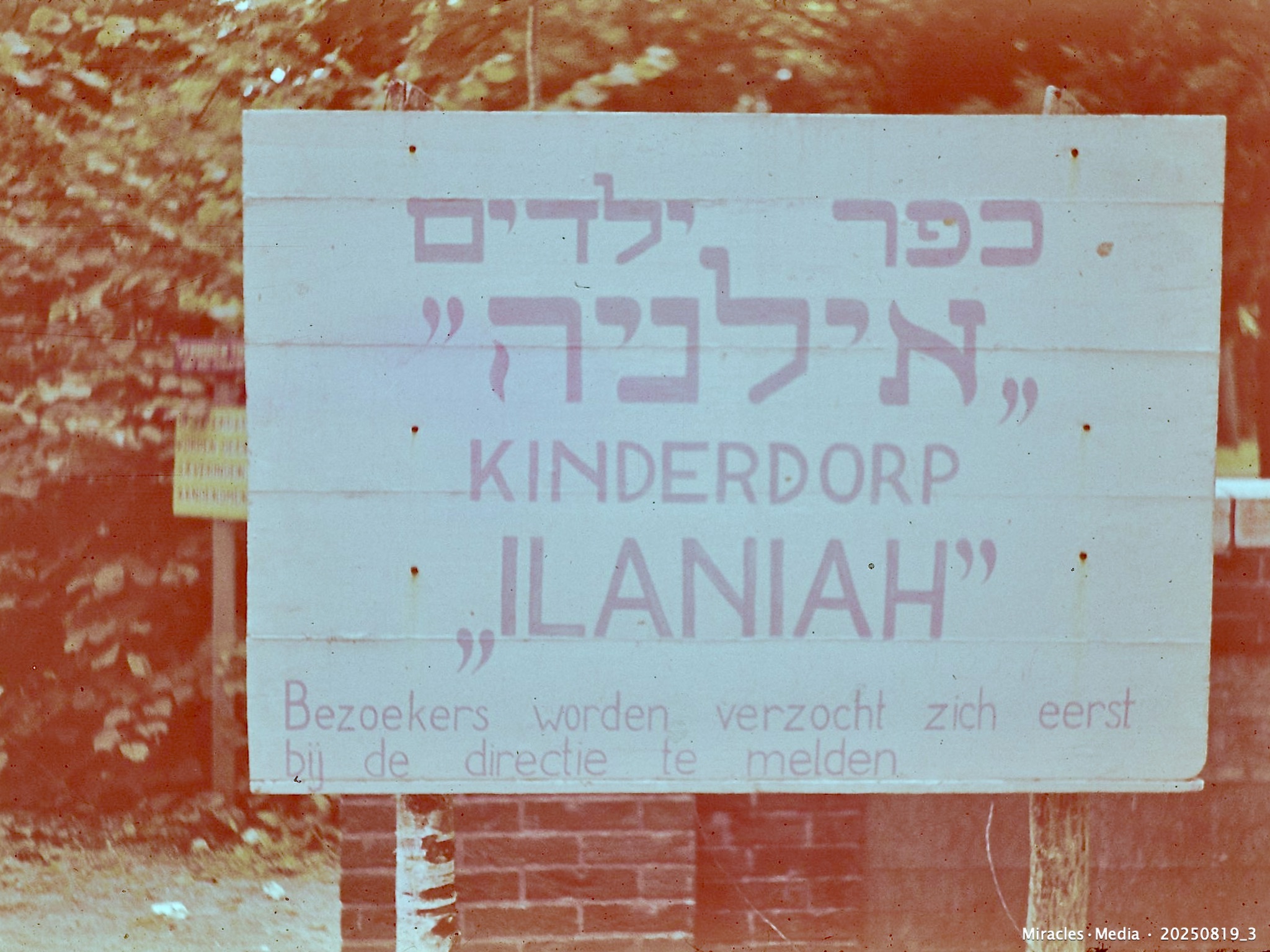
Sign in both Hebrew and Dutch at the entrance to Children’s Village Ilaniah in Apeldoorn, ca 1948. Miracles•Media • 20250819_3

Summary — After World War II, many Jewish children in Eastern Europe were left without parents and living in displaced persons (DP) camps. In 1947, the Dutch government, together with Jewish organizations, decided to temporarily take in 500 Jewish children from Romania.
They were housed in a special Children’s Village called Ilaniah near Apeldoorn, the Netherlands. There, from September 1947, the children (aged 6–14) received schooling in Hebrew, history, and general subjects, as well as training in manual skills like woodworking and sewing, in preparation for life in Palestine. They lived in groups linked to different Zionist youth movements.
Ilaniah also had cultural activities, including a choir that performed in Amsterdam in May 1948 during celebrations of the creation of the State of Israel.
In October 1948, Ilaniah was closed, and most of the children departed on the ship Negbah to Haifa, Israel. The youngest children who couldn’t travel were cared for elsewhere in the Netherlands.

Displaced Persons (DP)

Two years after the end of World War II in Europe, still around a million people lived in displaced person (DP) camps across Europe, primarily refugees from Eastern Europe and former inmates of the Nazi German concentration camps.

Resettlement 500 Jewish Children

For the resettlement of DPs, the Dutch government had decided in 1947 to accept as many DPs as could find a place in the labor market.

In addition, on January 7, 1947, the Dutch government granted a request — a request from Dutch Jewish authorities , officially submitted on December 31, 1946) — to also accommodate 500 children from the camps in the Netherlands, for a period of up to 3 years (Note 1).

Foundation “Five Hundred Jewish Children”

In the first months of 1947, staff was recruited and trained, and the “Five Hundred Jewish Children” Foundation (dutch: Stichting “Vijfhonderd Joodse kinderen”) was established to organize a stay of five hundred Jewish children from Eastern Europe for 1 to 2 years, with an education focused on Palestine (Note 2).

Romania

When it became clear that only a few of the Jewish orphans in German DP camps wanted to come to the Netherlands, it was decided in consultation between the Jewish organizations and the Dutch government that 500 children from Romania would be allowed to come to the Netherlands temporarily. Displaced children from Eastern Europe, many of whom lost their parents in the Nazi camps.

Initially, in July 1947, temporary shelter was arranged in Barneveld (labour camp “De Biezen”) for a small group of 40 displaced children from Eastern Europe.
For the eventual reception — also for a new transport of 450 children — work was still being done on the Children’s Village ‘ILANIAH’, specially set up for them, in the building complex “Het Apeldoornse bos” near Apeldoorn, the Netherlands.

Through collaboration with the International Refugee Organization (IRO) and the Joint American Distribution Committee, the 500 children were selected in Romania from members of the eight Zionist youth organizations in Romania, from far-right to far-left: Aguda, B’nei Akiba, Gordonja, Dror Igoed, Dror Haboniem, Hanoar Hatzioni, Hashomer Hatzair, and Betar. For orphans who lost both parents, the political preference of the deceased parents was investigated. The children were first concentrated in Prague.

On Saturday evening, September 20, 1947, they finally left Prague (Prague-Bubny station) by steam train to the Netherlands.

Children’s Village ‘Ilaniah’

On Monday evening, September 22, 1947, the group of approximately 500 Jewish children arrived in Apeldoorn by steam train from Prague. Their destination was the Children’s Village “ILANIAH” (Hebrew for “My Tree/Wood”), where they would stay for one to two years, to be trained for a mission in Palestine. The children were then between six and fourteen years old.

Earlier that day, the Dutch cinema news made a report of their arrival in the Netherlands at a stopover at Nijmegen station just before Apeldoorn (4).

Play, Work and Learn in Ilaniah

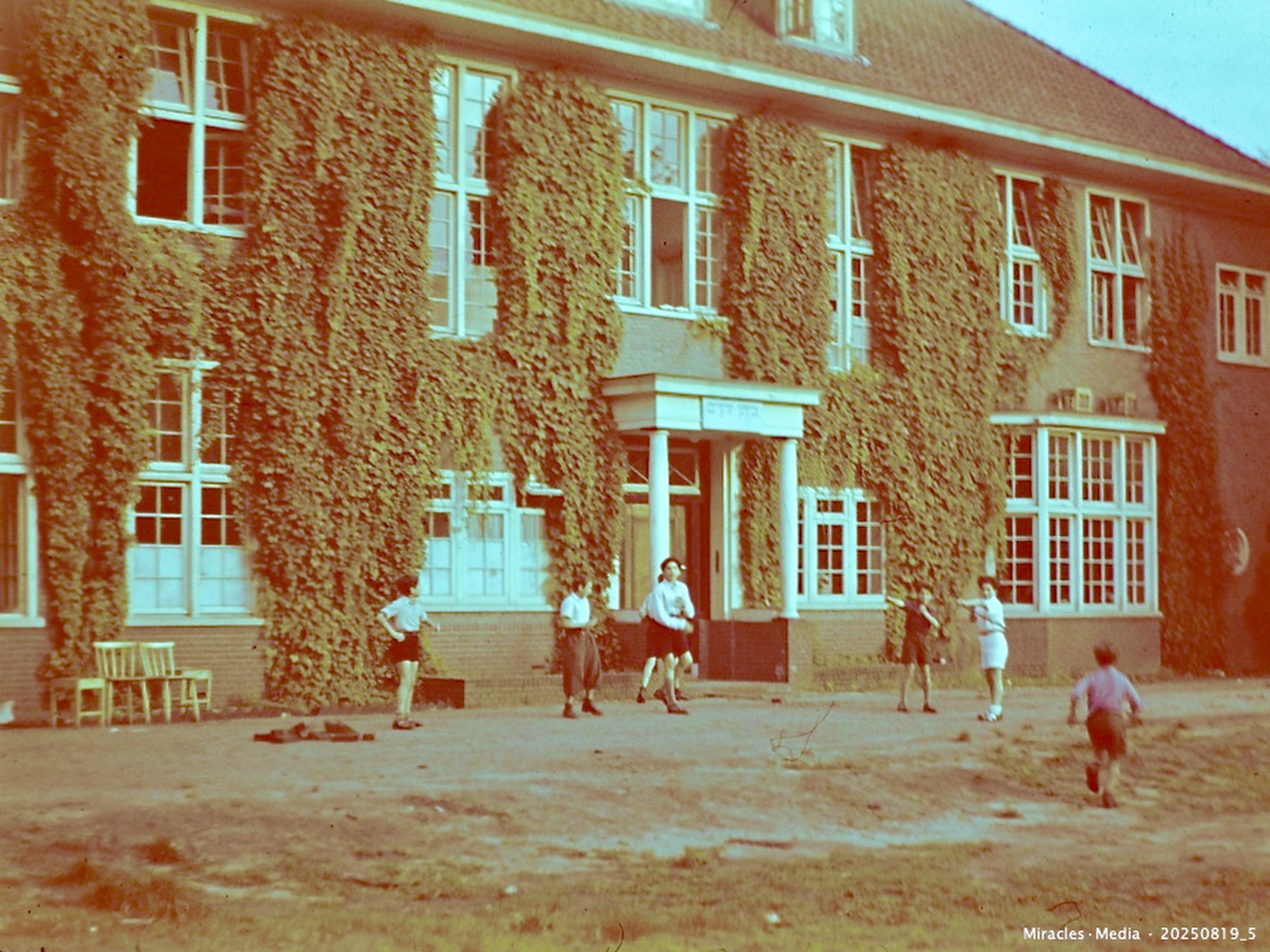
Ilaniah is headed by a pedagogical leader, Benjamin Sussmann, who came over from Palestine. There is a dedicated school with teachers from Romania and the Holy Land, as well as a dedicated pediatrician and nurses.

Children play in Children’s Village Ilaniah in Apeldoorn, ca 1948. Miracles•Media • 20250819_5


Hebrew, math, geography, physics, and both general and Jewish history are taught. The children are staying there in eight groups with their own leaders: Aguda, B’nei Akiba, Gordonja, Dror Igoed, Dror Haboniem, Hanoar Hatzioni, Hashomer Hatzair, and Betar, reflecting the future country’s political parties (Note 5).

Carpentry Room of Ilaniah Children’s Village: A boy shows the teacher his work, 1948. Miracles•Media • 20250819_6

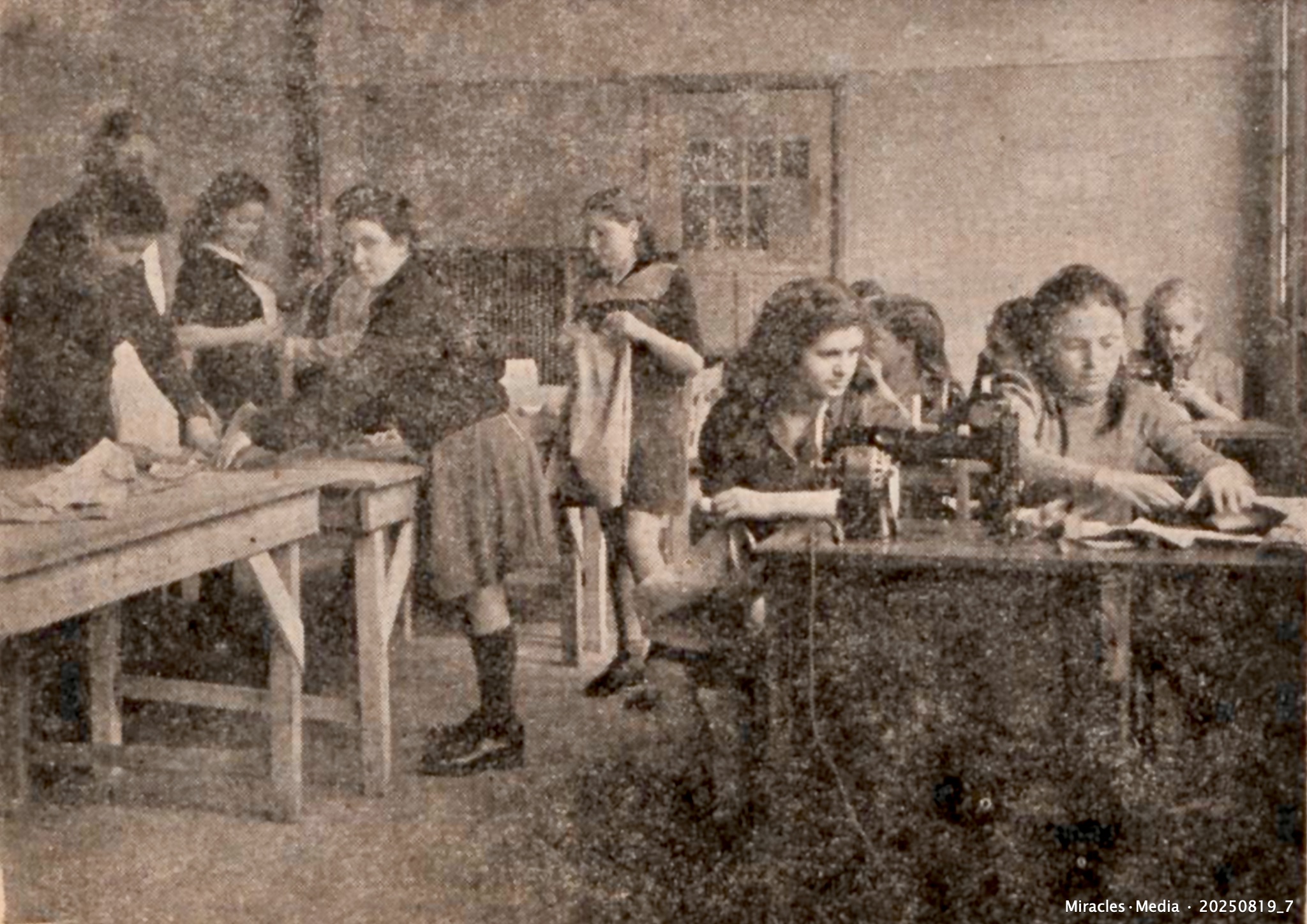
Soon, manual labor training was started under the supervision of the Dutch branch of the O.R.T. Union (Organisation for Rehabilitation through Training) — the Jewish global education network.


Sewing room of Ilaniah Children’s Village, 1948 (Clip). Miracles•Media • 20250819_7

The ORT organization reported that as early as November 1947, the Dutch ORT was training approximately 400 of the 500 Jewish youth in the children’s village in new workshops for woodwork, cardboard work, bookbinding, and cutting and sewing (Note 9).

Children’s choir Ilaniah performs at the proclamation of the Jewish state

There are also music and singing lessons, and a choir has been formed.

On the occasion of the proclamation of the State of Israel on May 14, 1948, the Dutch Zionist League organized a national meeting on May 16, 1948 in the Amsterdam Concertgebouw, with a performance by the choir of the Children’s Village “Ilaniah”.


Performance choir Ilaniah Children’s Village during National Meeting Dutch Zionist League – Proclamation of the Jewish State , Concertgebouw Amsterdam, Sunday 16 May 1948 . Miracles•Media • 20250819_8

Closing Ilaniah and Departure to Israel

A year after the opening of the Children’s Village Ilaniah, Ilaniah was closed again, when on October 6, 1948 the children embarked on the first Jewish ship – the Negbah – in Amsterdam for the journey to Haifa, Israel.


Children embark for the journey to Haifa, Israel, on the first Jewish ship – the Negbah – at the quay in Amsterdam, 6 Oktober 1948. Miracles•Media • 20250819_9

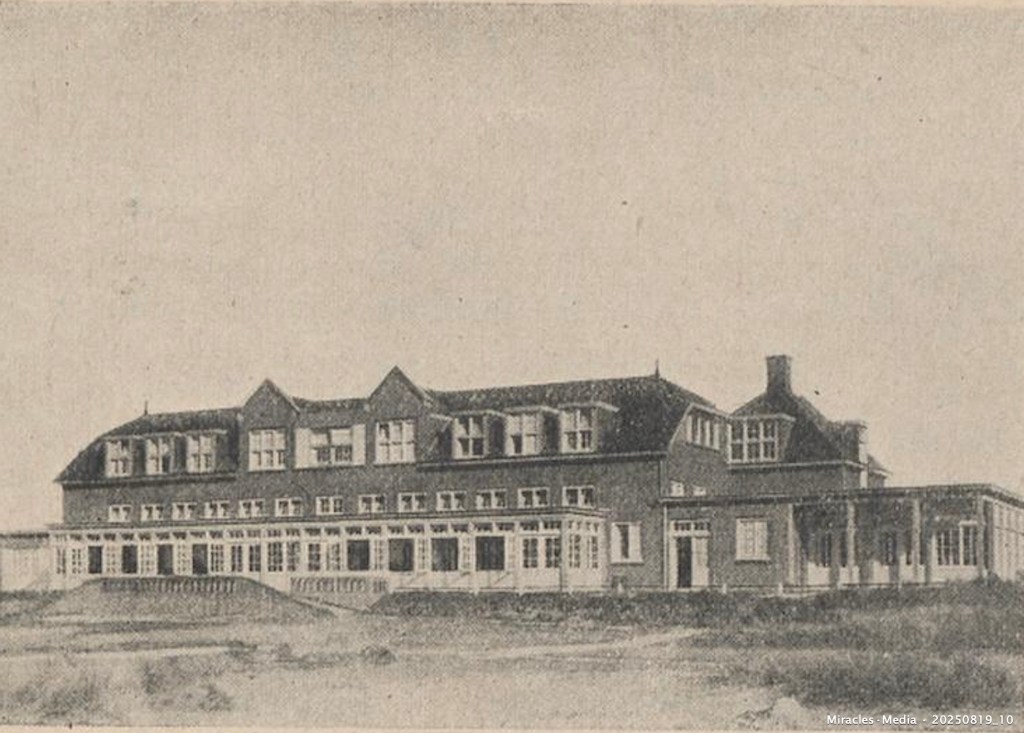
The youngest children who could not travel were accommodated in Zandvoort in the Clara Foundation building on the North Sea coast.


Clara-Stichting, Zandvoort, c. 1921. Miracles•Media • 20250819_10

Notes


500 Jewish children from camps to the Netherlands. Letter (dutch) Jan 7, 1947 Dutch Government to Dutch Jewish Organizations. Miracles•Media • 20250819_1

1. 500 Jewish children from camps to the Netherlands. Letter (dutch) Jan 7, 1947 Dutch Government to Dutch Jewish Organizations. Miracles•Media • 20250819_1 | Source : Nieuw Israelietisch Weekblad, Jan 17, 1947 / Delpher URL https://resolver.kb.nl/resolve?urn=ddd:010873395:mpeg21:a0005


Stichting “Vijfhonderd Joodse kinderen” (Clip). Miracles•Media • 20250819_2

2. Stichting “Vijfhonderd Joodse kinderen” (Clip). Miracles•Media • 20250819_2 | Source : Nieuw Israelietisch Weekblad, April 11, 1947 / Delpher URL https://resolver.kb.nl/resolve?urn=ddd:010873407:mpeg21:a0020

3. Sign in both Hebrew and Dutch at the entrance to Children’s Village Ilaniah in Apeldoorn, ca 1948. Miracles•Media • 20250819_3 | Source : United States Holocaust Memorial Museum, courtesy of Elinor Rosenstein Gabriel

4. Dutch cinema news reports the arrival of 500 Jewish children in Holland, Sep 22, 1947. Miracles•Media • 20250819_4. Source: 500 Jewish Children • Arrival in Holland • 20250811 | Michel van der Burg | Miracles•Media | Settela•Com | ISSN 2949-9313 | TakeNode 5c6e966b-5b45-47ef-ba01-17650007ae20 | URL https://settela.com/2025/08/11/

5. ILANIAH. Source : Nieuw Israelietisch Weekblad, Sep 17, 1948 / Delpher URL https://resolver.kb.nl/resolve?urn=ddd:010872060:mpeg21:p007

6. Children play in Children’s Village Ilaniah in Apeldoorn, ca 1948. Miracles•Media • 20250819_5 | Source : United States Holocaust Memorial Museum, courtesy of Elinor Rosenstein Gabriel

7. Carpentry Room of Ilaniah Children’s Village: A boy shows the teacher his work, 1948. Miracles•Media • 20250819_6 | Photo probably by Boris Kowadlo . Source : ORT and the Displaced Person Camps URL https://dpcamps.ort.org/photos/netherlands/

8. Sewing room of Ilaniah Children’s Village, 1948 (Clip). Miracles•Media • 20250819_7 | Source : Nieuw Israelietisch Weekblad, Sep 17, 1948 / Delpher URL https://resolver.kb.nl/resolve?urn=ddd:010872060:mpeg21:p007

9. Report on ORT Activities in the Netherlands, July-November 1947 . The attached report was submitted to the meeting to the executive of the World ORT Union in Zurich in November 1947. (ort netherlands report.pdf) URL https://dpcamps.ort.org/fileadmin/image_archive/reports/ort%20netherlands%20report.pdf

10. Performance choir Ilaniah Children’s Village during National Meeting Dutch Zionist League – Proclamation of the Jewish State , Concertgebouw Amsterdam, Sunday 16 May 1948 . Miracles•Media • 20250819_8 . Source : Collection Jewish Historical Museum, Amsterdam, JHM 02368-02 | https://joodsecanon.nl/n4z/1948-Viering-Israel-in-Concertgebouw/

11. Children embark for the journey to Haifa, Israel, on the first Jewish ship – the Negbah – at the quay in Amsterdam, 6 Oktober 1948. Miracles•Media • 20250819_9 . Source : Dutch National Archive (Photo by Ben Merk | Anefo). URL http://hdl.handle.net/10648/a8be2e80-d0b4-102d-bcf8-003048976d84

12. Clara-Stichting, Zandvoort, c. 1921. Miracles•Media • 20250819_10 . Source : De geïllustreerde joodsche post. 3 maart 1921. Delpher URL https://resolver.kb.nl/resolve?urn=MMUBA16:021070011:00016

Tags #Resettlement #Ilaniah #village #children #Jewish #displaced #DP #orphan #Palestine #Aliyah #Holland #Netherlands #Romania #Apeldoorn #school #zionism #training #education #emigration #holocaust #news #history #ww2 #ORT #state #Negbah

Citation info : 500 Jewish Children • Ilaniah • 20250819 | Michel van der Burg | Miracles•Media | Settela•Com | ISSN 2949-9313 | URL https://settela.com/2025/08/19/

500 Jewish Children • Arrival in Holland • 20250811


Summary — September 1947 Dutch cinema news on circa 500 Jewish children , displaced children from East Europe, who many of them lost parents in the Nazi camps, arriving from Prague by train in the Netherlands, where they will stay for up to 3 years, and trained for their future task in Palestine.

Dutch cinema news reports the arrival of a steam train carrying approximately 500 Jewish children in Holland, Monday, September 22, 1947 — filmed here during a stopover at Nijmegen station.
Displaced children from Eastern Europe, many of whom lost their parents in the Nazi camps. Through collaboration with the International Refugee Organization (IRO) and the Joint American Distribution Committee, they were selected in Romania from members of the eight Zionist youth organizations in Romania: Aguda, B’nei Akiba, Gordonja, Dror Igoed, Dror Haboniem, Hanoar Hatzioni, Hashomer Hatzair, and Betar. For orphans who lost both parents, the political preference of the deceased parents was estimated.
The children were first concentrated in Prague.


On Saturday evening, September 20, 1947, they began their train journey from Prague (Prague-Bubny), bound for the children’s village “Ilaniah” specially established for them in the “Het Apeldoornse Bos” building complex near Apeldoorn, the Netherlands. They arrived there on Monday evening, September 22, 1947.

Notes


1) Sign on train :
Repatriation train • Prague Bubny Station (Repatriačni vlak • (Dílny Praha Bubny)

2) Transcript (translated from dutch)

This train arriving in Nijmegen [Netherlands], brings 450 Jewish children from Eastern Europe to our country, most of whose parents died in the gas chambers of the German concentration camps.

They also lived in camps after the war, together with thousands of others, and most of them show that.

Our government has allowed these children, all between the ages of 6 and 14, to stay in the Netherlands for 3 years, in Apeldoorn, where they will be trained for their future task in Palestine.

Jewish organizations ensure that the children get something to eat and drink after the tiring journey.

And that turns out to be well received.

3) NL – Transcript (dutch , original)

Deze trein die in Nijmegen arriveert, brengt naar ons land 450 Joodse kinderen uit Oost-Europa wier ouders voor het merendeel de dood vonden in de gaskamers der Duitse concentratiekampen.

Ze hebben ook na de oorlog tesamen met nog duizenden anderen in kampen geleefd, en de meesten van hen is dat wel aan te zien.

Onze regering heeft toegestaan dat deze kinderen, allen tussen 6 en 14 jaar, gedurende 3 jaar in Nederland verblijven, in Apeldoorn, waar ze opgeleid zullen worden voor hun toekomstige taak in Palestina.

Joodse organisaties zorgen ervoor, dat de kinderen na de vermoeiende reis wat te eten en te drinken krijgen.

En dat blijkt goed in de smaak te vallen.

Tags #children #train #Jewish #displaced #DP #orphan #Palestine #Aliyah #Holland #Ilaniah #Romania #Apeldoorn #Nijmegen #school #zionism #training #education #emigration #holocaust #news #history #ww2

Updates

20250818 Minor text edit , with addition : For orphans who lost both parents, the political preference of the deceased parents was estimated.

20250820 correction description text source date (45>47)

Credits

Source: Dutch cinema news Polygoon-Profilti (Producer | 22 September 1947) courtesy of Netherlands Institute for Sound and Vision (Open Images).

Citation info : 500 Jewish Children • Arrival in Holland • 20250811 | Michel van der Burg | Miracles•Media | Settela•Com | ISSN 2949-9313 | TakeNode 5c6e966b-5b45-47ef-ba01-17650007ae20 | URL https://settela.com/2025/08/11/

Stefan & Ursula Breslauer in Westerborkfilm | 20240305

Stefan & Ursula Breslauer in Westerborkfilm | 20240305 – Clip from : Westerbork Film 🎦 2021 | 20220302 | Settela•Com | URL https://youtube.com/clip/UgkxdcMjzZQcH8jOtp1j2xFwrPxyAoHMcdFr

Filmmaker Rudolf Breslauer also filmed two of his children in the Westerborkfilm…

Stefan (left) & Ursula Breslauer, children of Rudolf Breslauer, the filmmaker of the Westerbork film at the farm of Camp Westerbork in 1944 – identified by the dutch photographer Sake Elzinga, who received Breslauer’s family photo albums last year when the family of Ursula – the only survivor – visited an expo on Breslauer in the Westerbork museum in the Netherlands.

Camp commander (SS-Obersturmführer) Albert Gemmeker ordered the Westerbork film , made by the German Jewish prisoner, photographer, Rudolf Breslauer in the spring of 1944.

Today 80 years ago – March 5, 1944 – the camp is an ‘Arbeitslager’ – a work camp – when Rudolf Breslauer starts filming the daily life of the Westerbork prisoners — inside : in the barracks, for example a religious service, cabaret, workshops, factories, aircraft and battery recycling, medical care, and outside the barracks : construction of a greenhouse, a football match, women working out, chopping wood, incoming transports, and eventually also the departure of a deportation train. After Breslauer films the deportation of Jews, Roma and Sinti to Bergen-Belsen and Auschwitz on May 19, 1944 the filming stops.
The haunting image of the 9-year-old dutch Sinti-girl Settela, standing in the closing doors of the goods train, and the unique footage of that deportation train that leaves the Westerbork camp, became iconic after the war.

Deportation Breslauer family

Werner Rudolf Breslauer , his wife Bella Weihsmann, sons Stefan and Max Michael (Mischa), and daughter Ursula were deported autumn 1944 from Westerbork to Theresienstadt and Auschwitz. Only Ursula survived.

Stefan & Ursula Breslauer in Westerborkfilm | 20240305 | Settela•Com | Frame 127475 from Westerbork Film 🎦 2021 | 20220302 | Settela•Com | ISSN 2949-9313 | Footage filmed by Rudolf Breslauer in 1944, courtesy of NIOD | Sound and Vision

Notes

Clip from : Westerbork Film 🎦 2021 | Complete Remastered Edition | YouTube https://youtu.be/ZiLNDziwEtc

Westerbork Film 🎦 2021 | 20220302 | Settela•Com | URL https://settela.com/2022/03/02/westerbork-film-🎦-2021-complete-remastered-edition-20220302/

Kinderen van filmmaker Breslauer herkend in historische Westerborkfilm. Dutch national news broadcaster NOS Nieuws, in cooperation with RTV Drenthe, 13:18 Monday 4 March 2024 | URL https://nos.nl/artikel/2511414-kinderen-van-filmmaker-breslauer-herkend-in-historische-westerborkfilm

Scene with Stefan & Ursula Breslauer, starting at 56:13 in the 1986 RVD edition of the Westerborkfilm:
Stefan & Ursula Breslauer in Westerbork Film RVD | 20240305 | Settela•Com | URL https://youtube.com/clip/UgkxfNzA72JeGgVoOFp_VTI4EQQr3yTwXu6_

Settela Film | 20220630 | Michel van der Burg | Settela•Com

Deportation Westerbork Film | 20210719 | Michel van der Burg | Settela•Com

English introduction to Westerborkfilm :
Westerborkfilm Introduction | 20220507 | Michel van der Burg | Settela•Com | URL https://settela.com/2022/05/07/westerborkfilm-introduction-20220507/

Citation info : Stefan & Ursula Breslauer in Westerborkfilm | 20240305 | Settela•Com | ISSN 2949-9313 | URL https://settela.com/2024/03/05

News

March 5, 2024 : Updated 21:21

Samudaripen Book Cover

Samudaripen Book Cover | 20221118 | Settela•Com | ISSN 2949-9313


For Settela•Com , Michel worked with Elisabeth Obadia at the small publishing house L’Esprit Frappeur in Paris and the Tokyo based French visual artist Benoit Dupuis (eden-olympia.net), by preparing a high quality camera-original still image of Settela (Ref 1) from the Westerbork film (Ref 2, 3) for the cover of the 3rd edition of the book Samudaripen, le génocide des Tsiganes (Ref 4) — the genocide of the Gypsies – by author, historian, Claire Auzias. Proud with the result. Waiting for the book to arrive …

REFERENCES

1 – Settela | 20220629 | Settela•Com | ISSN 2949-9313 | URL https://settela.com/2022/06/29/.

2 – Westerbork Film 🎦 2021 | 20220302 | Settela•Com | ISSN 2949-9313 | URL https://settela.com/2022/03/02/

3 – Westerborkfilm Introduction | 20220507 | Michel van der Burg | Settela•Com | ISSN 2949-9313 | URL https://settela.com/2022/05/07/

4 – Claire Auzias (2022) Samudaripen, le génocide des Tsiganes (Samudaripen, the Genocide of the Gypsies), Paris, L’Esprit Frappeur (3nd edition 2022) ISBN 978-2-85103-051-1 | URL https://livrelibre.fr/categorie/livres/editeurs/esprit-frappeur/

TakeNode aacc6868-73f9-4693-9eb6-41fc1b9ecad3

TAGS #Samudaripen #Settela #ClaireAuzias #Tsigane #Gypsy #book #cover #illustration #art #France #BenoitDupuis #EspritFrappeur #ElisabethObadia #AnnaMaria #Steinbach #portrait #still #image #Westerborkfilm #documentary #Westerbork #film #Rudolf #Breslauer #restauration #Roma #Sinti #Holocaust #Porajmos #children #concentration #camp #deportation #Jew #Netherlands #railcar #train #station #transit #UNESCO #film #Auschwitz #BergenBelsen #documentary #resistance #1Memo #SettelaCom #MiraclesMedia #michelvanderburg

Update

20230518 – Credits and references updated with ISSN

Settela Film | 20220630

New 2022 slow motion edition based on the newly found camera-original footage (the original negative film used in Breslauer’s camera May 19, 1944) as published last year in Deportation Westerbork Film | 20210719 (REF 1).
Before in 2017 a similar first slow-motion film was published (Settela | 20170721) (REF 2) that was using the ‘duplicate’ footage (not original footage) from the 1986 RVD film (REF 3).

The 9-year-old dutch Sinti-girl Anna Maria ‘Settela’ Steinbach peeks outside , at the last moment just before the sliding door is closed , standing inside a freight wagon with 74 people on May 19 , 1944 in the Westerbork concentration camp in Holland , when this deportation train leaves for Auschwitz-Birkenau – where Settela is murdered a few months later in one of the gas chambers. Here she wears a headscarf made from a torn sheet, because the Nazis had her head shaved , and while Settela peeks outside , her mother cries behind her in the car : “Get out of there, or soon your head gets in between!”
She was filmed by the Jewish prisoner filmmaker Rudolf Breslauer as part of a documentary film being made on the Westerbork camp (REF 4,5). More info in previous posts (REF 1–10).

This film starts with a slow-motion edition (15% original speed) , followed by the unedited 3-4 seconds clip taken from the 2021 Deportation Westerbork Film (REF 1) . Note : the images bounce occasionally , due to a technical artifact — a defect in Breslauer’s camera (REF 10).

Credit

Settela Film | 20220630 | Michel van der Burg | Settela•Com | ISSN 2949-9313 | CC BY 4.0

TAGS #Settela #slowmotion #Anna #Maria #Steinbach #portrait #image #Westerborkfilm #documentary #Westerborkfilm #Westerbork #film #Rudolf Breslauer #restauration #Roma #Sinti #Holocaust #Porajmos #children #concentration camps #deportation #Jew #Netherlands #railcar #train #station #transitcamp #UNESCO #film #Auschwitz #Bergen-Belsen #documentary #resistance #bounce #1Memo #SettelaCom #MiraclesMedia #michelvanderburg

REFERENCES

1 – Deportation Westerbork Film | 20210719 | Michel van der Burg | Settela•Com | ISSN 2949-9313 | URL https://settela.com/2021/07/19/deportation-westerbork-film-20210719/

2 – Settela | 20170721 | Michel van der Burg | Settela•Com | ISSN 2949-9313 | CC BY 4.0 | URL https://settela.com/2017/07/21/settela/

3 – Westerbork Film | Full version RVD 1986 | 20190605 | Michel van der Burg | Settela•Com | ISSN 2949-9313 | CC BY 4.0

4 – Westerborkfilm Introduction | 20220507 | Michel van der Burg | Settela•Com | ISSN 2949-9313 | URL https://settela.com/2022/05/07/westerborkfilm-introduction-20220507/

5 – Westerbork Film 🎦 2021 | 20220302 | Settela•Com | ISSN 2949-9313 | CC BY 4.0 | URL https://settela.com/2022/03/02/westerbork-film-🎦-2021-complete-remastered-edition-20220302/

6 – ANONYM | Girl with the headscarf … | 20210416 | Michel van der Burg | Settela•Com | ISSN 2949-9313 | CC BY 4.0 | URL https://settela.com/2021/04/16/anonym-girl-with-the-headscarf-20210416/

7 – ANONIEM | Meisje met hoofddoekje … | 20210417 | Michel van der Burg | Settela•Com | ISSN 2949-9313 | CC BY 4.0 | URL https://settela.com/2021/04/17/anoniem-meisje-met-hoofddoekje-20210417/

8 – The Forgotten Genocide – The fate of the Sinti and Roma. Online exhibition by Tweedewereldoorlog.nl . | URL https://romasinti.eu

9 – Willy & Settela | Born Nomad | 20210519 | Michel van der Burg | Settela•Com | ISSN 2949-9313 | URL https://settela.com/2021/05/19/willy-settela-born-nomad/

10 – Restauratie Westerborkfilm (May 12, 2021) Valentine Kuypers | Beeld en Geluid URL: https://www.beeldengeluid.nl/kennis/blog/restauratie-westerborkfilm

Update

20230518 – Credits and references updated with ISSN

Settela | 20220629

Settela | 20220629 | Settela•Com | ISSN 2949-9313 | CC BY 4.0 | Scan camera original negative film May 19, 1944 footage Westerbork Film

The 9-year-old dutch Sinti-girl Anna Maria ‘Settela’ Steinbach peeks outside , at the last moment just before the sliding door is closed , standing inside a freight wagon with 74 people on May 19 , 1944 in the Westerbork concentration camp in Holland , when this deportation train leaves for Auschwitz-Birkenau – where Settela is murdered a few months later in one of the gas chambers. Here she wears a headscarf made from a torn sheet, because the Nazis had her head shaved , and while Settela peeks outside , her mother cries behind her in the car : “Get out of there, or soon your head gets in between!”
She was filmed by the Jewish prisoner filmmaker Rudolf Breslauer as part of a documentary film being made on the Westerbork camp (REF 1). More info in references (REF 1, 2, 3, 4).

Credit

Still image from Westerbork Film 🎦 2021 | 20220302 | Settela•Com | ISSN 2949-9313 | CC BY 4.0

Settela | 20220629 | Settela•Com | ISSN 2949-9313 | CC BY 4.0

REFERENCES

1 – Westerbork Film 🎦 2021 | 20220302 | Settela•Com | ISSN 2949-9313 | CC BY 4.0 | URL https://settela.com/2022/03/02/westerbork-film-🎦-2021-complete-remastered-edition-20220302/

2 – ANONYM | Girl with the headscarf … | 20210416 | Michel van der Burg | Settela•Com | ISSN 2949-9313 | CC BY 4.0 | URL https://settela.com/2021/04/16/anonym-girl-with-the-headscarf-20210416/

3 – ANONIEM | Meisje met hoofddoekje … | 20210417 | Michel van der Burg | Settela•Com | ISSN 2949-9313 | CC BY 4.0 | URL https://settela.com/2021/04/17/anoniem-meisje-met-hoofddoekje-20210417/

4 – The Forgotten Genocide – The fate of the Sinti and Roma. Online exhibition by Tweedewereldoorlog.nl . | URL https://romasinti.eu

TAGS #Settela #Anna #Maria #Steinbach #portait #still #image #Westerborkfilm #documentary #Westerborkfilm #Westerbork #film #Rudolf Breslauer #restauration #Roma #Sinti #Holocaust #Porajmos #children #concentration camps #deportation #Jew #Netherlands #railcar #train #station #transit camp #UNESCO #film #Auschwitz #Bergen-Belsen #documentary #resistance #Settela.com #1Memo #SettelaCom #MiraclesMedia #michelvanderburg

Update

20230518 – Credits and references updated with ISSN