Deportation of Dutch Roma to Auschwitz – 19 May 1944 • 9-year-old Anna Maria (Settela) Steinbach was deported together with 244 other Roma from Westerbork to Auschwitz (1,2) • Source : Settela•Com • Collection Auschwitz Museum • URL https://fb.watch/Hgg5lusc-8/
The Auschwitz Museum acquired the short film ‘Settela’ from Settela•Com (1) in the Auschwitz Memorial Collection (3), and is succesfully screening the film each year since 2019 on the 19th May at the Auschwitz Memorial / Muzeum Auschwitz facebook page .
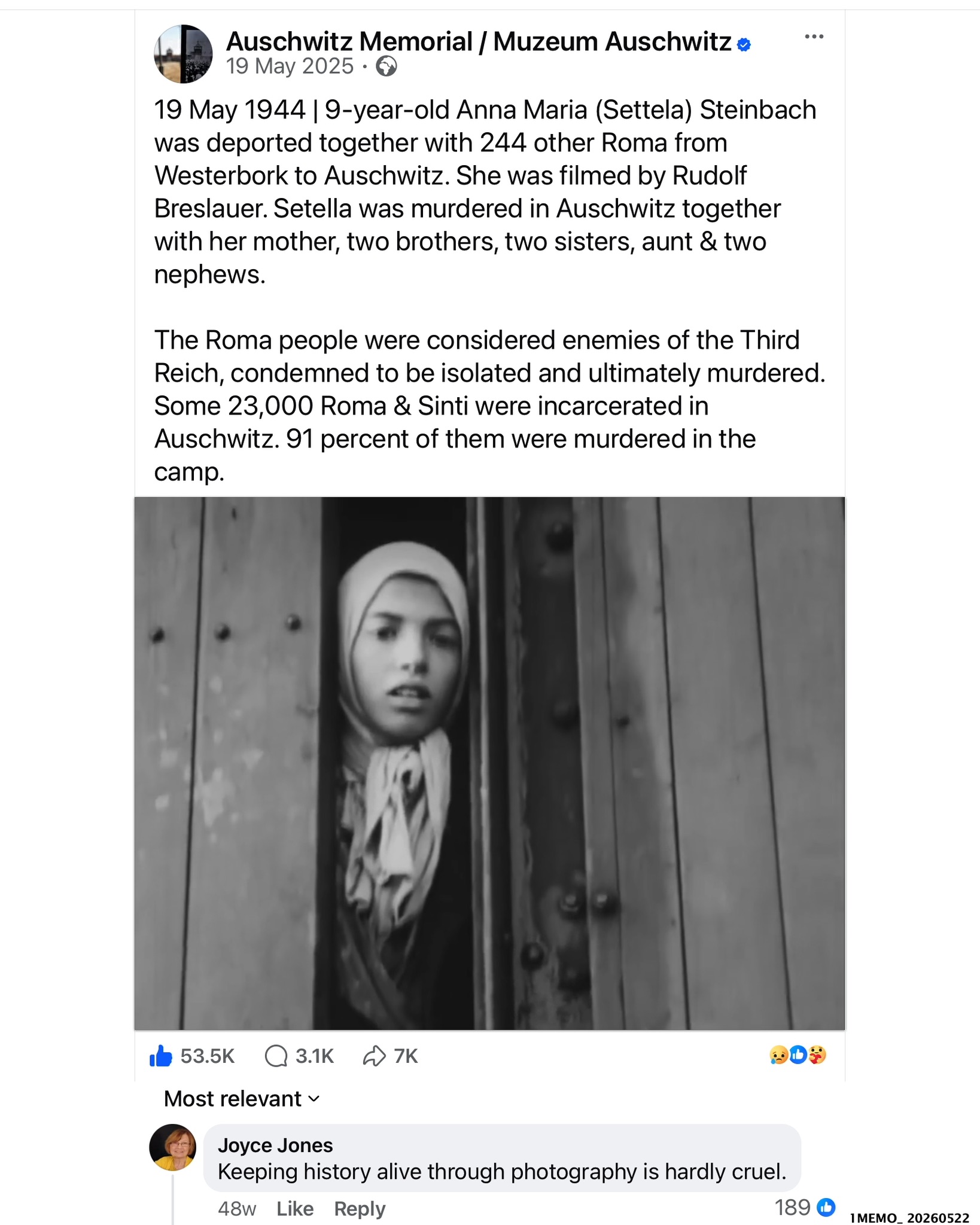
Last year’s post of the film ‘Settela’ , 19th May 2025 at the Auschwitz Memorial / Muzeum Auschwitz facebook page, accumulated by now one million views, and over 3000 comments (Image 1MEMO_20260522).
The film was created in an attempt to keep the scene on screen longer on the one hand, and to preserve the natural and historical original on the other. Thus a compilation was created, showing the same scene twice. The film ends with the original 3 seconds clip selected from the Westerbork film footage shot by Jewish prisoner Rudolf Breslauer (4), and the film starts with that same clip , digitally slowed down 10× in post-production.
This film was created and first online in 2017 (5) , and published (antedated) as the first post (1) shortly after the start May 19, 2019, of the online journal Settela•Communications — short Settela•Com (6).
More on the Roma in Auschwitz , online at the Auschwitz Museum (7).
Citation info : Settela Film Auschwitz Museum • 20260522 | Michel van der Burg | Settela•Com | ISSN 2949-9313 | CC BY 4.0 | URL https://settela.com/2026/05/22
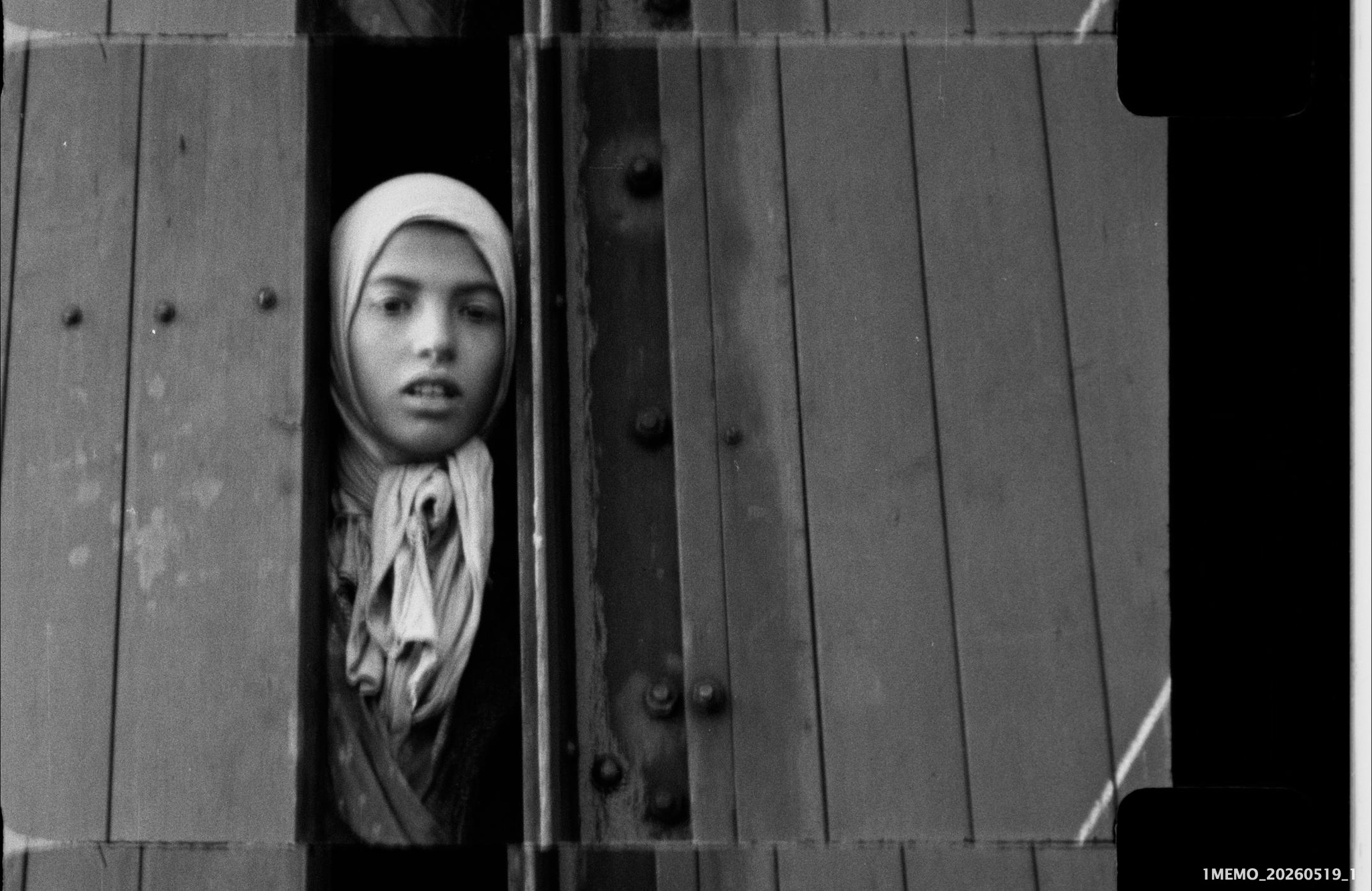
Settela Steinbach — The Girl with the Headscarf • 1MEMO_20260519_1 • Settela•Com • Frame from camera original film reel of the Westerborkfilm (1).
On May 19, 1944, at the Westerbork transit camp, a glimpse of Sinti girl Settela Steinbach wearing a headscarf appears between the sliding doors of a cattle car awaiting deportation to Auschwitz (1,2,3). In May 1945, her father, Moeselman Steinbach, wrote to “Repatriation” in the Netherlands: “…I very politely request you to inform me whether my wife and 10 children have arrived, or only children (Gypsy children) from the Auschwitz concentration camp in Poland.” (4).
The 9-year-old dutch Sinti-girl Anna Maria ‘Settela’ Steinbach peeks outside , at the last moment just before the sliding door is closed , standing inside a cattle car with 74 people on May 19 , 1944 in the Westerbork transit camp in Holland , when this deportation train leaves for Auschwitz-Birkenau – where Settela is murdered a few months later in one of the gas chambers (5).
While Settela peeks outside , her mother cries behind her in that cattle car : “Get out of there, or soon your head gets in between!”
She is wearing a headscarf made from a torn sheet because the Nazis shaved her head upon arrival at Westerbork transit camp on May 16, 1944, following the “Gypsy raid” carried out that same day at the Zwaaikom caravan site in Eindhoven, the Netherlands (6).
Settela Film • 20220630
Settela was filmed only a few seconds by the Jewish prisoner filmmaker Rudolf Breslauer as part of a documentary film being made in 1944 on the Westerbork camp . Those seconds , also in slow-motion are shown in the 2022 Settela Film • 20220630 (7)
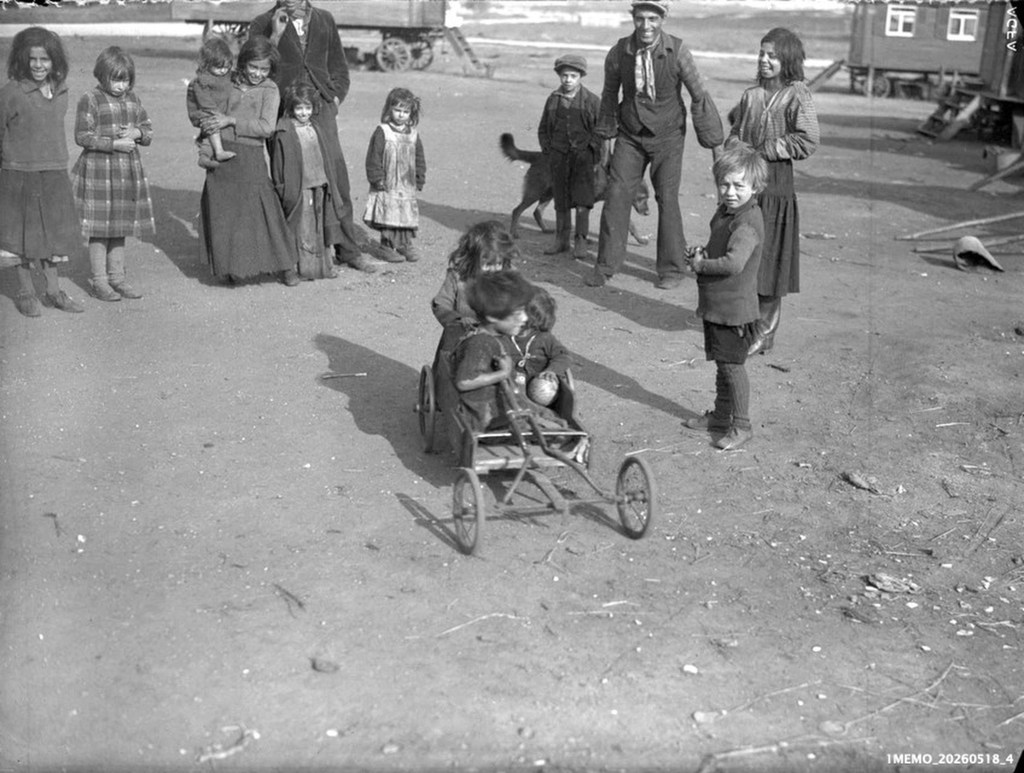
The toddler Settela in the arms of her older sister Elisabeth Steinbach at the Heksenberg Sinti caravan site in 1935 • Photo Jan de Jong • 1MEMO_20260518_4
Anna Maria (‘Settela’) Steinbach was born 23 December 1934 in Buchten, Netherlands, and photographed at age ~1 , in the arms of her older sister Elisabeth Steinbach, with others of the Steinbach family, and other families, at the nearby Sinti caravan site ‘Heksenberg’, October 1935, by photographer Jan de Jong (8) • 1MEMO_20260518_4
Settela was deported together with her brothers and sisters (Willy “Celestinus”, Willem, Elisabeth, Johanna, Philibert, Florentina, Willem, Anna), and mother Toetela (Emilia) Steinbach (born 23 March 1902 in Antwerp, Belgium), with other Steinbach and other nomad families – all together ca 245 Sinti and Roma and ca 450 Jews – on May 19th 1944 from the dutch Camp Westerbork to the Auschwitz and Bergen-Belsen camps (5,6).
Toetela’s eldest child Moekela (Magdalena; born 14 Sep 1922) had gone to Belgium and had been deported earlier – 15 Jan 1944 – with her 6 months old baby Jeanette – Toetela’s granddaughter – on the Z-Transport from transit camp Kazerne Dossin in Mechelen to Auschwitz, were they were murdered on arrival.
Settela’s father Heinrich (‘Moeselman’) Steinbach (born Nov 11, 1901 in Gründorf in Germany) died alone of grief June 6, 1946 in Maastricht in the Netherlands – his wife and 10 children had not survived the camps.
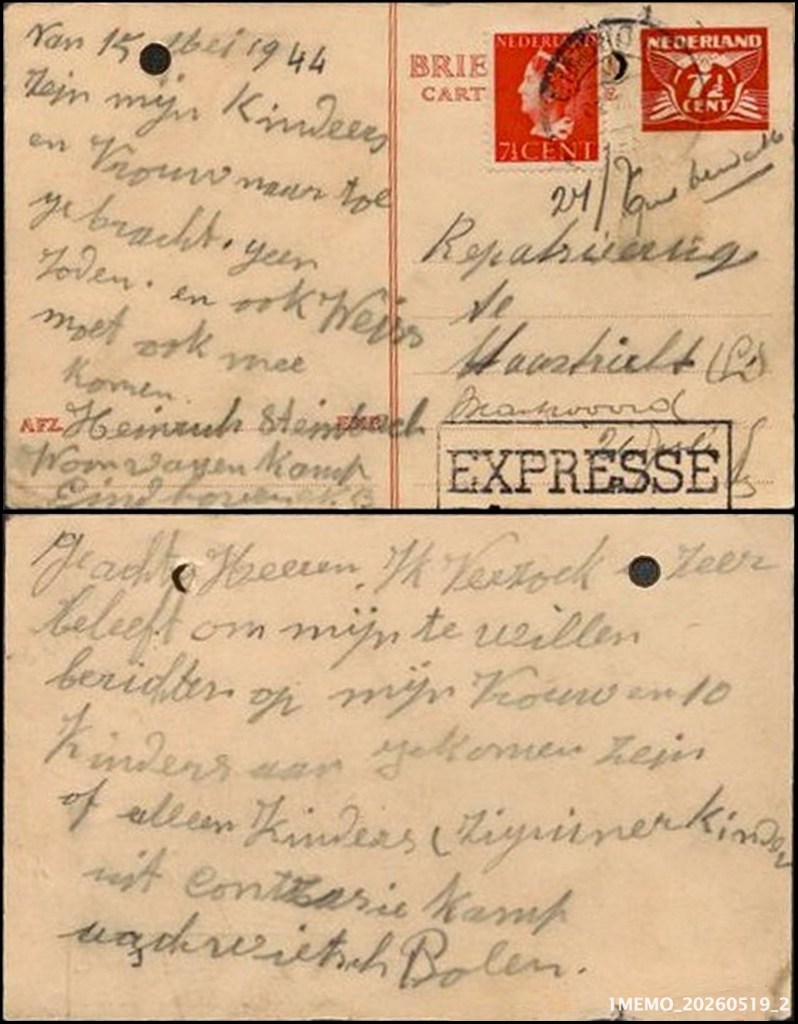
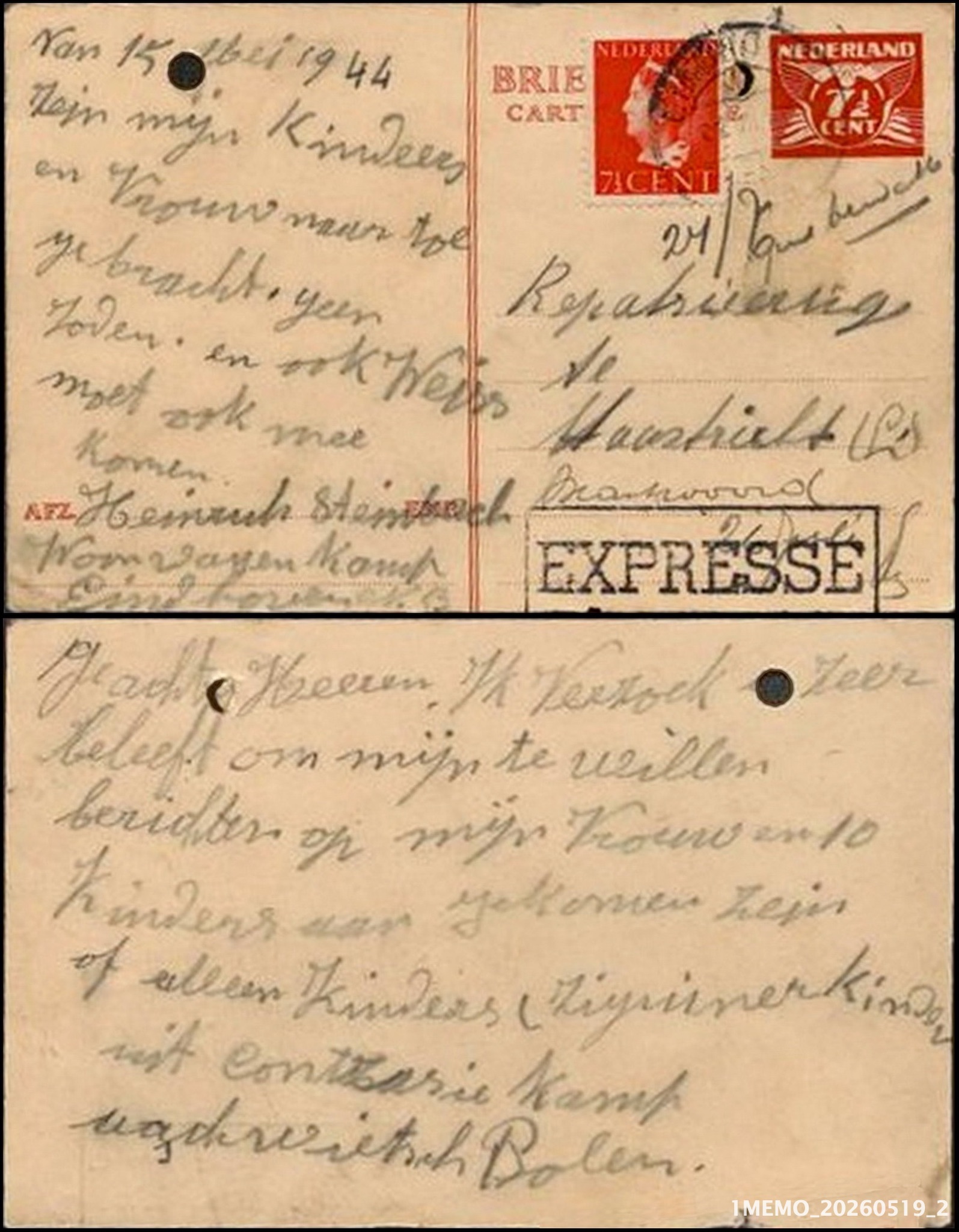
To : “Repatriation” in Maastricht (Netherlands) — “Dear Sirs, I very politely request you to inform me whether my wife and 10 children have arrived, or only children (Gypsy children) from the Auschwitz concentration camp in Poland. From May 15, 1944, my children and wife were taken there; no Jews. And Weiss had to come along too. — Heinrich Steinbach. Caravan site Eindhoven , North Brabant” • 1MEMO_20260519_2 • Settela•Com
One year earlier , May 22, 1945, two weeks after the liberation of Holland, Heinrich Steinbach — living at the caravan site in Eindhoven (North Brabant, Netherlands) — inquires about the fate of his wife and ten children on a postcard written to the “Repatriation” in Maastricht (Netherlands). The text on the postcard reads — translated from dutch (4) :
“Dear Sirs, I very politely request you to inform me whether my wife and 10 children have arrived, or only children (Gypsy children) from the Auschwitz concentration camp in Poland.
From May 15, 1944, my children and wife were taken there; no Jews. And Weiss had to come along too.
Heinrich Steinbach. Caravan site Eindhoven, North Brabant”
‘Moeselman’ Heinrich Steinbach — living at the caravan site in Eindhoven (North Brabant, Netherlands) — inquires about the fate of his wife and ten children on a postcard written to the “Repatriation” in Maastricht (Netherlands). The dutch text on the postcard reads :
“Geachte Heeren, Ik verzoek u zeer beleeft om mijn te willen berichten op mijn vrouw en 10 kinders aan gekomen zein of alleen kinders (zigeunerkinders) uit contrasie kamp uaschwietsch Polen.
Van 15 mei 1944 zein mijn kindeers en vrouw naar toe gebracht, geen joden. En ook Weiss moet ook mee komen. Heinrich Steinbach. Woonwagenkamp Eindhoven N.B.”
New evidence of atrocities committed by Nazis on British soil is revealed in the documentary – The Ghosts of Alderney – Hitler’s Island Slaves – to be released by Wild Dog Films during 2025 (1).
The film premiered at a London, UK, press screening earlier this week (2-5).
Ghosts of Alderney is a documentary on the artist Piers Secunda’s research into the use of slave labour on the British Channel island Alderney during World War II. In 1941, Hitler’s forces took over the island. What followed was a brutal occupation.
Workers from across Nazi-occupied Europe were forced to build Hitler’s military defences on the Channel Islands.
Alderney had the worst conditions—prisoners were beaten, starved, shot, and buried in mass graves — a scene compared to Belsen concentration camp in later reports.
The film reveals new evidence of crimes on the island, including firing squads, mass killings, and contests between Nazi officers using prisoners for target practice, aiming repeatedly at body parts, until they died.
It also explores how the British government avoided prosecuting those responsible after the war.
Experts in the film suggest that this was part of a cover-up.
Historian Madeleine Bunting calls it “the biggest mass murder on British soil,” yet many facts are still unclear.
A recent UK inquiry confirmed over 1,100 deaths, though more are missing.
Through testimony and research, the film tries to tell the personal stories behind the numbers.
Secunda says, “These were real people, not just names on a list.”
Ghosts of Alderney: Hitler’s Island Slaves, , a production from Wild Dog, a British independent company, will be released later this year.
April 19, 1945 – today 80 years ago – the Buchenwald band ‘Rhythmus’ gave a jazz concert in the evening in the cinema barracks of the Nazi concentration camp Buchenwald for the survivors, their comrades, and the US soldiers that liberated the camp.
Czech political prisoner Jiří Žák started the Rhythmus jazz orchestra of inmates of the Buchenwald camp. ‘Woke’ music — ‘Entartete’ art , degenerated art, officially in Nazi Germany, the 3rd Reich. The Nazis enthusiastically applauded the “outside” forbidden jazz in the camp, and various SS people took part in the concerts given between August 1943 and December 1944 by this official camp band Rhythmus (1,2,3).
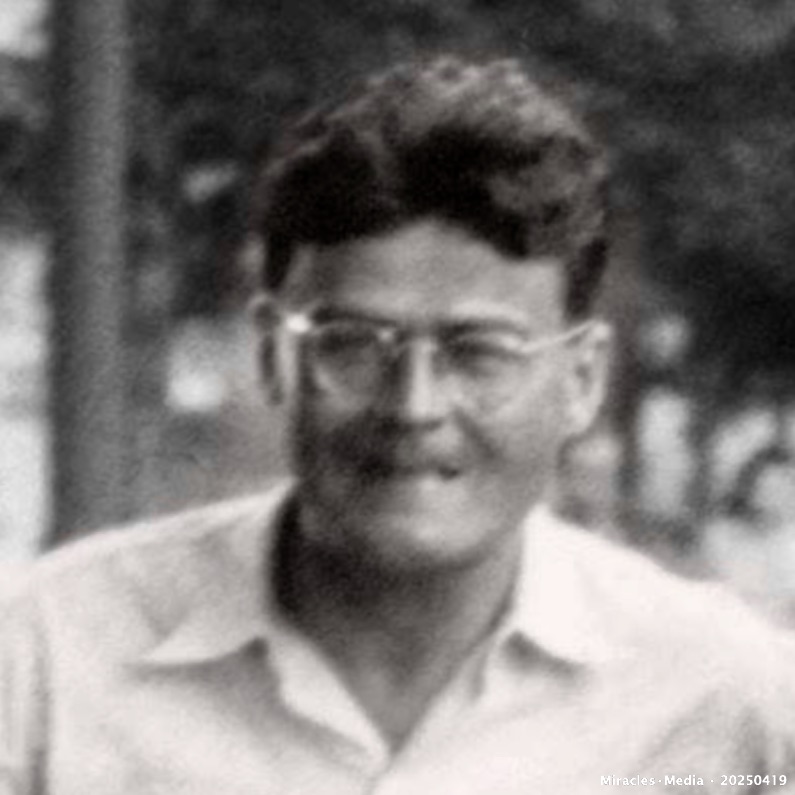
Jiří Žák | 20250419 | Family Archive Goldscheider | Miracles•Media
Jiří Žák sabotaged the transports, as the trusted administrator of the Buchenwald transport department, by setting up a “Transport Reserve C” commando of almost 100 prisoners, thus freed from hard labor, and saved numerous Jews from deportation and death march shortly before liberation of the camp.
The French singer Robert Widerman listed on the April 19,1945 Rhythmus program , was one of these Jewish prisoners saved by Jiří Žák. Band leader Yves Darriet (4) came up with the nickname ‘Clary’ for Robert (from the movie Les Adventures de Désirée Clary). Robert Widerman would become a Hollywood legend, known as Robert Clary (5).
From Buchenwald to Hollywood, The Robert Clary Story • Extended Version (2025)
From Buchenwald to Hollywood, The Robert Clary Story : The Documentary (Extended Version) • 20250419 • A film by Karen and Richard Bloom and Michel van der Burg
Robert Clary’s story is told in our documentary : From Buchenwald to Hollywood – the Story of Robert Clary • A film by Karen and Richard Bloom and Michel van der Burg. The original film premiered in 2018 at the Fort Lauderdale International Film Festival (FLIFF) in Hollywood (Florida, USA) , and after screening at other film festivals, premiered online March 1, 2022 on the occasion of Robert’s 96th birthday (6,7).
We today present the 2025 extended version of the documentary (8) , now featuring also Robert Clary’s desire that Jiri Zák be nominated as a Righteous Among the Nations at Yad Vashem.
8. From Buchenwald to Hollywood, The Robert Clary Story : The Documentary (Extended Version) • 20250419 • A film by Karen and Richard Bloom and Michel van der Burg . URL https://youtu.be/xwECq2KPdz4
Almost certainly, three Jewish people have been recognized in the unique Westerbork film from 1944 (1). This time it concerns the 9-year-old boy Israël Wijnschenk, his father Max Wijnschenk, and his grandmother Betje Kokernoot-van Furth, who all lived in Utrecht (Holland).
Last week, the Dutch public broadcaster NOS (2) reported the news from the Utrecht (Dutch) news site Nieuws030 (3) that it is very likely that three people were recognized again in this film made by the Jewish prisoner and filmmaker Rudolf Breslauer showing the deportation of Jews, Roma and Sinti by train in Camp Westerbork on May 19, 1944.
Image researcher Koen Hulsbos — who previously identified an Amsterdam couple in this deportation train (4) — thought he recognized the young Israël Wijnschenk, a pupil at the time of the Joodse (Jewish) School Utrecht, and presented this to Victor Frederik, researcher of the Joodse School (5,6). The boy, the man, and the woman seem to belong together, and were recognized from family photos, also by family members.
It is certain that Max and his wife Chel (not in the images) returned to Utrecht after the war, their children Israël and his sister Kitty were murdered. Grandma Betje was also gassed in Auschwitz.
A portrait of Israël Wijnschenk is shown at the site of Joods Monument (7).
According to the transport list, there were two other children in that wagon, Joseph Beugeltas (11 years old) and Manfred Studzinsky (7 years old). Joseph Beugeltas appeared to have blond hair, and could not have been it (6). To be completely sure, the researchers are still looking for a photo of Manfred Studzinsky, for comparison…
The Dutch national broadcaster NOS (1) and the local RTV Drenthe (2) reported this morning (23 Dec 2024) that 2 more people have been recognized in the Westerbork film.
It is the Amsterdam couple Marcus Pels and Hendrika Brandon. They were identified by the image researcher Koen Hulsbos – volunteer worker at the Behind the Star project of the NIOD Institute for War, Holocaust and Genocide Studies .
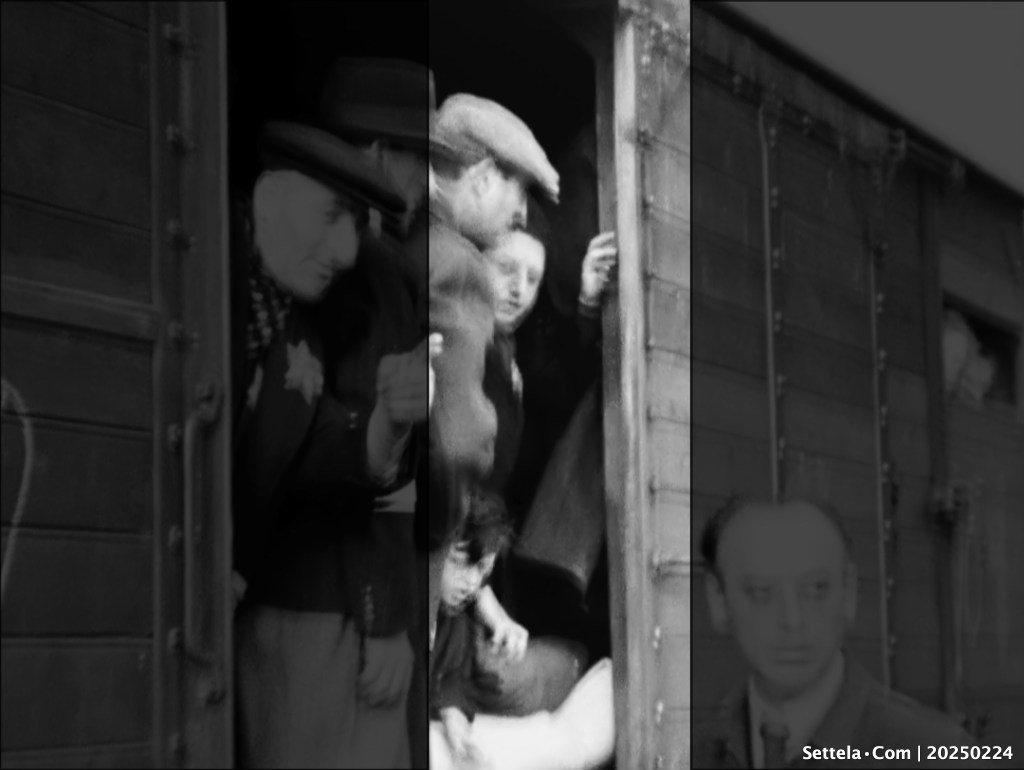
The Jewish photographer and filmmaker Rudolf Breslauer, while a prisoner in the Westerbork transit camp in the Netherlands, was commissioned by camp commander Albert Gemmeker to make film recordings for the Westerbork film in the spring of 1944, featuring images of a deportation train.
The NOS broadcast referred to images in the first published Westerbork film (3) :
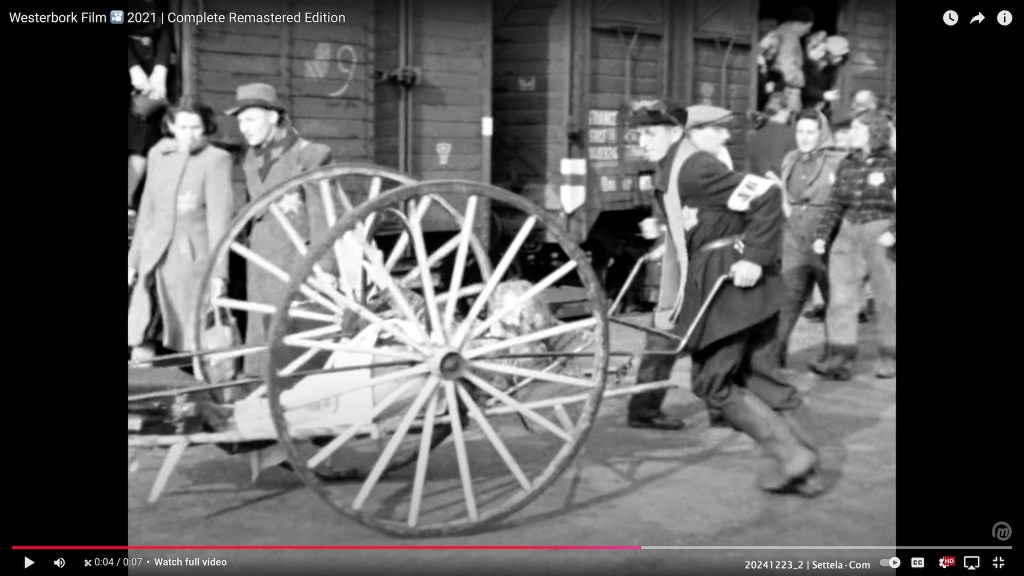
The film can be viewed in its entirety on YouTube. After just under 5 minutes 🔗 a man with a hat can be seen looking into the camera with a smile, and next to him a woman with black, slightly wavy hair can be seen from behind. The same couple appears again at 6 minutes 🔗. It turned out to be the Amsterdam couple Marcus Pels and Hendrika Brandon.
Pels & Brandon Clip 1 & 2
Also available on YouTube is the more recent second Westerborkfilm (4). This 2021 edition has the recently found original camera rolls of the deportation transport (Reel E198), with higher quality images of the couple.
Hulsbos had already had photos of Marcus Pels and Hendrika Brandon in his collection of images of prisoners who were transported on that day – May 19, 1944 – when Breslauer films the deportation of Jews, Roma and Sinti to Bergen-Belsen and Auschwitz.
“I’ve seen the film many times, but at one point I thought, ‘Hey, this couple is on screen twice.’ I had never really noticed that before,” says Hulsbos.
Hulsbos then compared the film footage with his photos. “And then I thought: that’s it,” says the amateur film historian.
Marcus Pels was murdered immediately after arriving in Auschwitz. Hendrika Brandon survived the war, as did their daughter and son, who were in hiding with a foster family. Katy (Keetje, 86 years old) and Philip (83) are still alive and live in Canada. They were shown the film footage and confirmed that they were their parents.
“They don’t remember their father. So to actually see images of him, to see him just walking around alive, there are no words to describe it,” granddaughter Lisa Kaufman said as a family spokesperson. “It was very special to see my grandmother, who I grew up with.”
Anonym | Girl with the headscarf …
In the Westerbork film, Hendrika looks at the woman on the stretcher, who was recognized in the 1990s through her suitcase as Frouwke Kroon, and thus was the key to identifying this transport and thus also to the name of the anonymous girl with the headscarf between the wagon doors – Settela (5,6).
Deportation Breslauer family
Earlier this year it was reported that filmmaker Rudolf Breslauer had also filmed two of his children , Stefan , and Ursula Breslauer in the Westerborkfilm at the farm (7).
Werner Rudolf Breslauer , his wife Bella Weihsmann, sons Stefan and Max Michael (Mischa), and daughter Ursula were deported later in 1944 from Westerbork to Theresienstadt and Auschwitz. Only Ursula survived.
Filmmaker Rudolf Breslauer also filmed two of his children in the Westerborkfilm…
Stefan (left) & Ursula Breslauer, children of Rudolf Breslauer, the filmmaker of the Westerbork film at the farm of Camp Westerbork in 1944 – identified by the dutch photographer Sake Elzinga, who received Breslauer’s family photo albums last year when the family of Ursula – the only survivor – visited an expo on Breslauer in the Westerbork museum in the Netherlands.
Camp commander (SS-Obersturmführer) Albert Gemmeker ordered the Westerbork film , made by the German Jewish prisoner, photographer, Rudolf Breslauer in the spring of 1944.
Today 80 years ago – March 5, 1944 – the camp is an ‘Arbeitslager’ – a work camp – when Rudolf Breslauer starts filming the daily life of the Westerbork prisoners — inside : in the barracks, for example a religious service, cabaret, workshops, factories, aircraft and battery recycling, medical care, and outside the barracks : construction of a greenhouse, a football match, women working out, chopping wood, incoming transports, and eventually also the departure of a deportation train. After Breslauer films the deportation of Jews, Roma and Sinti to Bergen-Belsen and Auschwitz on May 19, 1944 the filming stops. The haunting image of the 9-year-old dutch Sinti-girl Settela, standing in the closing doors of the goods train, and the unique footage of that deportation train that leaves the Westerbork camp, became iconic after the war.
Deportation Breslauer family
Werner Rudolf Breslauer , his wife Bella Weihsmann, sons Stefan and Max Michael (Mischa), and daughter Ursula were deported autumn 1944 from Westerbork to Theresienstadt and Auschwitz. Only Ursula survived.
Stefan & Ursula Breslauer in Westerborkfilm | 20240305 | Settela•Com | Frame 127475 from Westerbork Film 🎦 2021 | 20220302 | Settela•Com | ISSN 2949-9313 | Footage filmed by Rudolf Breslauer in 1944, courtesy of NIOD | Sound and Vision
Scene with Stefan & Ursula Breslauer, starting at 56:13 in the 1986 RVD edition of the Westerborkfilm: Stefan & Ursula Breslauer in Westerbork Film RVD | 20240305 | Settela•Com | URL https://youtube.com/clip/UgkxfNzA72JeGgVoOFp_VTI4EQQr3yTwXu6_
Settela Film | 20220630 | Michel van der Burg | Settela•Com
Deportation Westerbork Film | 20210719 | Michel van der Burg | Settela•Com